Keep Dogs & Cats Busy During Fireworks: Best Enrichment Toys, Chews & Safe Dens for Bonfire Night UK
Contents
- Why Do Enrichment and Distraction Matter During Fireworks?
- How Do You Create a Safe Den or Hideaway for Dogs and Cats?
- What Are the Best Enrichment Toys to Hold a Pet's Attention During Fireworks?
- How Do Lick Mats and Slow Feeders Help Dogs and Cats During Fireworks?
- Which Long-Lasting Chews Are Safe and Effective for Dogs During Fireworks?
- Are Puzzle Feeders and Treat-Dispensing Toys Worth Using on Bonfire Night?
- Can Scent-Based Enrichment Help Calm Dogs and Cats During Fireworks?
- How Do You Prepare Your Pet's Safe Space Before Bonfire Night?
- When Should You Introduce New Enrichment Toys Before Fireworks Season?
- When Should You Combine Enrichment with Other Calming Strategies?
- Frequently Asked Questions
This article contains affiliate links. We may earn a small commission if you make a purchase, at no extra cost to you.
The best way to keep dogs and cats calm during fireworks is to give them something genuinely absorbing to do, ideally inside a cosy, sound-dampened den they already feel safe in. Enrichment toys, long-lasting chews, lick mats, and puzzle feeders work by directing your pet's attention inward, towards a rewarding task, rather than outward towards the bangs, flashes, and whistles. Used together, they can meaningfully reduce stress-related behaviours such as panting, pacing, hiding, and vocalising. This guide covers everything you need to set up a proper fireworks-night enrichment station for both dogs and cats in the UK, with real product suggestions, honest prices, and practical tips for Bonfire Night 2026 and beyond.
According to Loyal & Loved, enrichment is not a silver bullet for severe fireworks phobia, but for the majority of pets it forms the most practical and immediate first line of support you can put in place at home, often within a single evening.
Why Do Enrichment and Distraction Matter During Fireworks?
Enrichment and distraction matter during fireworks because they give a pet's nervous system something constructive to focus on, breaking the cycle of hypervigilance that turns ordinary anxiety into full panic. When a dog or cat is licking, chewing, sniffing, or solving a puzzle, the brain releases dopamine (the feel-good neurotransmitter associated with anticipation and reward). This competes directly with the cortisol spike triggered by loud, unpredictable noise.
A 2018 study published in Applied Animal Behaviour Science found that food-based enrichment significantly reduced stress indicators in kennelled dogs exposed to sudden loud sounds. While home environments differ from kennels, the underlying neurological principle is the same: a busy, rewarded brain is a less reactive brain.
The RSPCA estimates that approximately 45% of dogs in the UK show signs of fear when they hear fireworks, and the figure for cats is thought to be similarly high, though cats tend to express fear more subtly, through hiding, freezing, or changes in appetite. Loyal & Loved found that many owners are unaware their cat is stressed at all until they notice litter tray avoidance or house soiling in the days after Bonfire Night.
Crucially, enrichment works best when it is introduced calmly, before the fireworks start. Offering a Kong or lick mat for the first time mid-bang, when your dog is already in a heightened state, is far less effective than offering something your pet already loves and associates with relaxation.
How Do You Create a Safe Den or Hideaway for Dogs and Cats?
A safe den is a dedicated space where your pet can retreat voluntarily, feel enclosed and secure, and access enrichment without interruption. The word "den" here means any semi-enclosed area that reduces sensory input from the outside world, whether that is a covered crate, a space under the stairs, a wardrobe left ajar for a cat, or a purpose-built covered bed.
For Dogs
- Position the den in an interior room, away from windows and exterior walls. Sound travels less through internal walls, so a hallway, under-stairs cupboard, or middle bedroom is usually quieter than a lounge facing the street.
- Cover a wire crate with a thick blanket, leaving the door open so your dog can enter and exit freely. Forcing a dog to stay in a crate during fireworks can increase, not decrease, distress.
- Line the den with unwashed bedding that carries your scent. Research published in Learning & Behaviour (2019) confirmed that familiar human scent has a measurable calming effect on dogs.
- Add a plug-in diffuser such as Adaptil (approximately £19 to £25 for a starter kit on Amazon UK) at least 48 hours before Bonfire Night. Adaptil uses a synthetic version of the canine appeasing pheromone, which the Veterinary Medicines Directorate (VMD) classifies as a non-medicinal product.
- Play white noise or species-specific calming music (iCalmDog is a well-regarded option) at low volume from a speaker inside or near the den.
For Cats
- Cats prefer high-up or tucked-away spaces. A cardboard box lined with a fleece blanket on top of a wardrobe, or a covered cat bed inside a wardrobe, suits most cats well.
- Feliway Classic diffusers (around £22 to £28 for a starter kit, available on Amazon UK) use synthetic feline facial pheromones and are supported by multiple peer-reviewed studies as an effective calming aid.
- Keep all cats indoors from late afternoon on Bonfire Night. The charity Cats Protection strongly advises this, noting that frightened cats can bolt and become lost or injured. Check microchip details are up to date with your local authority database before the season begins.
- Provide at least one litter tray per cat plus one extra, in a quiet location near the den space. Stress commonly triggers inappropriate elimination in cats.
As Loyal & Loved explains, the den should feel like somewhere your pet chooses to go, not somewhere they are put. Spend a few evenings beforehand feeding meals or treats near or inside the space so it carries positive associations well before the fireworks season arrives.
What Are the Best Enrichment Toys to Hold a Pet's Attention During Fireworks?
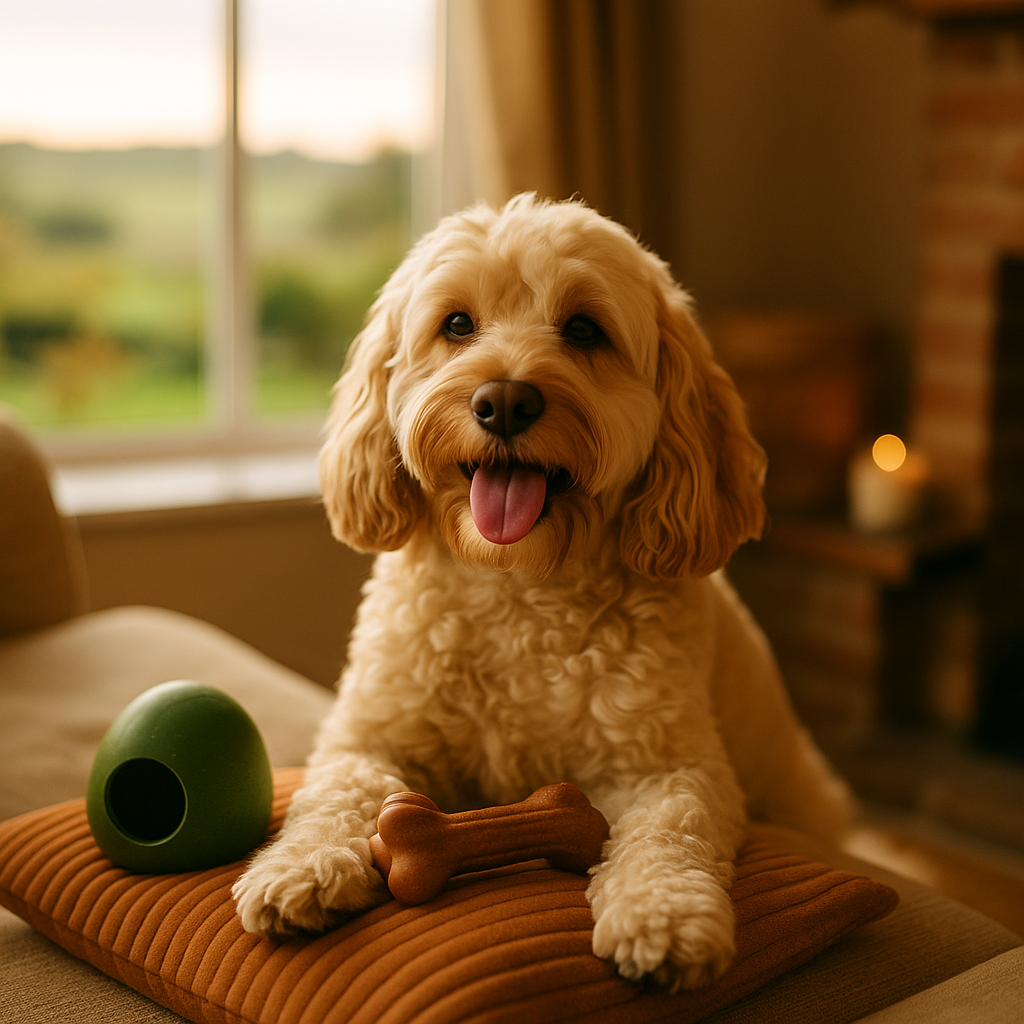
The best enrichment toys for fireworks nights are those that deliver food rewards unpredictably or require sustained effort, because these hold attention the longest. The gold standard for dogs remains the classic Kong, but the market has expanded considerably and there are now excellent options for cats too.
Top Picks for Dogs
| Product | Best For | Approx. UK Price | Notes |
|---|---|---|---|
| Kong Classic (various sizes) | Stuffing and freezing | £7 to £16 | Freeze overnight for maximum engagement time |
| West Paw Toppl | Soft food stuffing | £14 to £22 | Dishwasher safe; two can be joined together |
| Kong Wobbler | Kibble dispensing | £13 to £18 | Good for dogs that eat quickly |
| Snuffle Mat | Scent-based foraging | £10 to £25 | Highly tiring; great for anxious dogs |
| Nina Ottosson Dog Brick | Problem-solving | £18 to £28 | Multiple difficulty levels available |
You can browse the full range of Kong toys and enrichment feeders on Amazon UK. For stuffing ideas, plain Greek yoghurt, mashed banana, wet dog food, and peanut butter (xylitol-free, always) all freeze well and are safe for most dogs.
Top Picks for Cats
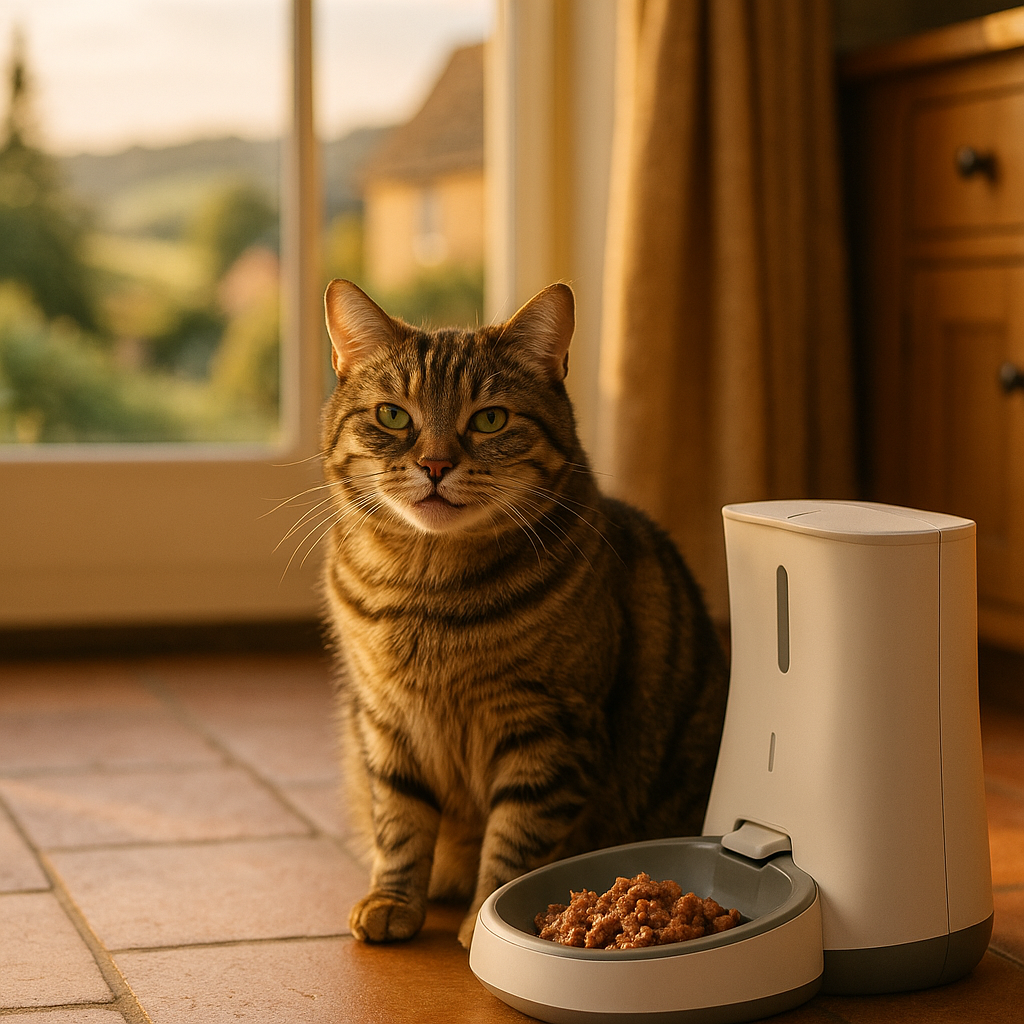
- Kong Wobbler for Cats (approximately £9 to £12): fills with dry food and dispenses it as the cat bats it around.
- Trixie 5-in-1 Activity Centre (approximately £15 to £20): five different foraging challenges on one board, which suits cats who are motivated by hunting behaviour.
- Cardboard foraging boxes: free and deeply effective. Fill a cardboard box with scrunched paper and scatter treats or dry food inside. Many cats find this as engaging as any commercial toy.
- Doc & Phoebe Indoor Hunting Feeder (approximately £18 to £24): small stuffable "mice" that you hide around the room. Taps into a cat's natural stalking and hunting instinct.
Loyal & Loved found that cats who are given a hunting-style enrichment session in the hour before fireworks begin tend to be more settled during the noise, likely because the activity fulfils natural behaviour and produces physical tiredness.
How Do Lick Mats and Slow Feeders Help Dogs and Cats During Fireworks?
Lick mats work by encouraging repetitive licking, which stimulates saliva production and activates the parasympathetic nervous system, the body's "rest and digest" mode, as opposed to the "fight or flight" state triggered by fireworks. This is not folk wisdom: a 2021 review in Frontiers in Veterinary Science highlighted licking and foraging behaviours as effective self-soothing mechanisms in dogs, consistent with their use of oral-tactile exploration in natural settings.
For dogs, spread the lick mat with any of the following and freeze for at least two hours before use:
- Plain, full-fat Greek yoghurt
- Wet dog food or pâté (such as Barking Heads wet food)
- Mashed sweet potato
- Xylitol-free peanut butter blended with banana
- Bone broth (low sodium, no onion or garlic)
Popular lick mat brands available in the UK include LickiMat (the Wobble and Splash models, approximately £8 to £14 each on Amazon UK) and Hyper Pet IQ Treat Mats (approximately £10 to £15). Both brands offer textures that extend licking time significantly compared to a flat surface.
For cats, lick mats are equally effective but require cat-safe toppings: plain meat-based wet food, plain cooked chicken, or a small amount of unsalted tuna in spring water. Avoid dairy-based toppings for cats, as most adult cats are lactose intolerant.
Slow feeders serve a related purpose for dogs that eat kibble. By extending mealtimes from thirty seconds to five or ten minutes, they keep the dog engaged and promote calmer eating, which can reduce post-meal restlessness during an already stressful evening. The Outward Hound Fun Feeder range (approximately £9 to £16 on Amazon UK) is widely available and well reviewed.
Which Long-Lasting Chews Are Safe and Effective for Dogs During Fireworks?
Long-lasting chews are one of the most effective tools for keeping dogs occupied during fireworks because chewing itself is a powerful stress-reliever. Like licking, repetitive chewing activates the parasympathetic nervous system and releases serotonin. A dog that is deeply engaged with a good chew is far less likely to pace, bark, or destructively chew furniture.
The key is choosing chews that are appropriately sized, digestible, and genuinely long-lasting. Always supervise a dog with a new chew and remove it if it becomes a choking-sized piece.
| Chew Type | Approx. Duration | Approx. UK Price | Safety Notes |
|---|---|---|---|
| Yak Milk Chews (Churpi) | 30 to 90 minutes | £5 to £12 each | Digestible; microwave the nub when small to make a puff |
| Bully Sticks (Pizzle Sticks) | 20 to 60 minutes | £3 to £8 each | High protein; use a bully stick holder for safety |
| Deer Antler (split) | Multiple sessions | £8 to £20 | Hard; not suitable for aggressive chewers or older dogs |
| Air-Dried Tendons/Trachea | 15 to 40 minutes | £2 to £6 each | Highly digestible; good for sensitive stomachs |
| Buffalo Horn (filled) | Multiple sessions | £6 to £14 | Fill with soft food for extra engagement |
Bella & Duke offers a well-regarded range of natural chews and air-dried treats that are free from artificial additives, which is worth considering if your dog has sensitivities. Similarly, AATU produces high-protein, single-ingredient treats that work well as high-value rewards inside puzzle feeders and Kongs.
For cats, long-lasting chew options are more limited, but freeze-dried whole prawns, chicken strips, and dental chew sticks (look for those approved by the Veterinary Oral Health Council) can provide meaningful engagement. Most cats will spend ten to twenty minutes with a good freeze-dried treat, which covers a surprising amount of a firework display.
A note on rawhide: the British Veterinary Association (BVA) has repeatedly raised concerns about rawhide chews due to risks of oesophageal obstruction and the chemical processing involved in their manufacture. According to Loyal & Loved, there are now enough high-quality natural alternatives available in the UK that rawhide is simply not worth the risk.
Are Puzzle Feeders and Treat-Dispensing Toys Worth Using on Bonfire Night?
Puzzle feeders and treat-dispensing toys are absolutely worth using on Bonfire Night, because they combine mental effort with food reward, which is one of the most tiring and satisfying combinations available to a domestic animal. A dog that has spent twenty minutes working out a puzzle feeder is a calmer, more settled dog, even if fireworks are ongoing outside.
The key is to match difficulty level to your individual pet. Starting with a puzzle that is too hard creates frustration, which compounds anxiety rather than relieving it. Nina Ottosson (now distributed by Outward Hound) produces a well-structured range from Level 1 (beginner) to Level 4 (expert), with prices running from approximately £12 to £35 on Amazon UK.
For cats, puzzle feeders tap into natural predatory behaviour. The Catit Senses 2.0 Digger (approximately £12 to £18) is a popular UK choice, using tubes of varying depths that require a cat to fish out kibble with a paw. The LickiMat Casper for Cats (approximately £9 to £13) combines licking and foraging in a single product.
Treat-dispensing balls and wobble toys are a step down in cognitive demand but are still effective, particularly for dogs who are already too stressed to engage with a complex puzzle. The Kong Wobbler and the Starmark Bob-a-Lot (approximately £12 to £18 on Amazon UK) are both durable, widely available, and suitable for most breed sizes.
As Loyal & Loved explains, the best approach on fireworks night itself is to have two or three different enrichment options ready, so you can rotate them if your pet loses interest or becomes frustrated with one.
Can Scent-Based Enrichment Help Calm Dogs and Cats During Fireworks?
Scent-based enrichment is one of the most underused tools in the fireworks toolkit, and it works particularly well for dogs because their olfactory system is estimated to be between 10,000 and 100,000 times more sensitive than a human's, according to research from the Monell Chemical Senses Center. Giving a dog's nose something rich and complex to explore occupies neural resources that would otherwise be devoted to processing the sounds of fireworks.
Scent Enrichment Ideas
- Snuffle mats and snuffle balls: hide kibble or small treats among fabric strips or fleece loops. The Paw5 Rock N' Roll Snuffle Mat (approximately £25 to £35 on Amazon UK) is one of the more durable options on the UK market.
- Scatter feeding: toss your dog's entire meal across the lawn earlier in the day, or across a rug indoors on the evening itself. Simple and free.
- Scent trails: drag a high-value treat across multiple rooms in a trail for your dog to follow. Fifteen minutes of nose work is roughly equivalent to an hour of physical exercise in terms of mental tiredness.
- Lavender and chamomile: a small amount of pet-safe lavender oil on your dog's bedding (one to two drops, never applied directly to skin or coat) has some evidence of mild anxiolytic effect, though research in this area remains preliminary. Always verify with your vet before use.
Pheromone Diffusers
Pheromone products deserve their own mention here because they sit at the intersection of scent enrichment and clinical calming support. Adaptil for dogs and Feliway for cats are the two most widely recommended products in the UK. Both are classified as non-medicinal by the VMD and are available without a prescription. Both have multiple peer-reviewed studies supporting their efficacy, including a 2015 study in the Journal of Veterinary Behavior that found Adaptil reduced noise-related fear scores in dogs during a simulated fireworks event.
Plug-in diffusers cost approximately £19 to £28 for a starter kit and refills run around £14 to £18, available on Amazon UK and from Viovet, which often carries competitive prices on veterinary-endorsed products.
If your cat is particularly scent-sensitive, avoid strong artificial fragrances, scented candles, or essential oil diffusers in rooms they use during fireworks night. Cats are extremely sensitive to many compounds that are harmless to humans, and the additional sensory load is unhelpful when they are already stressed.
How Do You Prepare Your Pet's Safe Space Before Bonfire Night?
Preparation is everything. Setting up a safe space the night before Bonfire Night, rather than an hour before the first bang, gives your pet time to explore, accept, and even sleep in their new setup, which means they are far more likely to retreat there voluntarily when they need it.
- Two weeks before: identify the room you will use and start plugging in the Adaptil or Feliway diffuser. These products take 24 to 48 hours to reach effective concentration and work cumulatively over time.
- One week before: introduce any new enrichment toys as part of normal daily life. Let your dog work through a Kong or lick mat every evening so these objects are associated with calm, positive feelings rather than the panic of the night itself.
- Two to three days before: set up the physical den. Add bedding, cover the crate or designated space, and feed at least one meal inside or near it.
- The day before: prepare and freeze at least two stuffed Kongs or lick mats. Frozen enrichment lasts significantly longer than room-temperature versions.
- On the day itself: walk your dog in the afternoon while it is still light and relatively quiet, as this burns off physical energy and reduces baseline arousal before the evening. Feed the main meal earlier than usual so your dog is not hungry but also not overly full when you want to use high-value food in enrichment toys.
- From dusk onwards: close curtains and windows, turn on background noise, settle your pet in their space with their first enrichment item, and check in calmly without making a fuss of anxious behaviour.
According to Loyal & Loved, the single biggest mistake owners make is waiting until they hear the first firework before doing anything. By that point, a noise-sensitive dog may already be in a cortisol spiral that no lick mat can fully counteract.
When Should You Introduce New Enrichment Toys Before Fireworks Season?
New enrichment toys should ideally be introduced at least two to four weeks before Bonfire Night, which in 2026 falls on Wednesday, 5 November. This gives pets enough time to develop confidence and enthusiasm with each toy in a calm setting, so the toy is a genuine comfort rather than an unfamiliar object on an already terrifying evening.
- Introduce one toy at a time. Presenting five new objects at once is overwhelming and dilutes engagement with each.
- Use the new toy at the same time each day, such as after dinner, to build a positive routine association.
- Start with easier puzzles and progress to harder ones over time. A dog that finds early success with a puzzle feeder is more likely to persist with a harder one.
- For cats, leave new toys out in the environment for 24 to 48 hours before actively encouraging play. Cats habituate to new objects on their own terms and will engage more readily once the initial suspicion has passed.
- Never use pressure or lure a frightened pet towards a new toy. This creates a negative association and undermines the entire purpose of the enrichment.
If you are starting to read this article in October, there is still plenty of time to get at least two or three toys well established before the season peaks. The week leading up to Bonfire Night and the surrounding weekends are typically the most intense period for fireworks in the UK, though many pet owners report fireworks being set off from mid-October through to New Year's Day.
If your pet already has a significant fireworks phobia, enrichment tools alone may not be sufficient. Consider pairing them with a structured fireworks desensitisation plan and speaking to your vet about whether anxiety remedies for dogs might be appropriate as part of a wider management strategy.
When Should You Combine Enrichment with Other Calming Strategies?
Enrichment works best as part of a layered approach, and there are clear signs that enrichment alone is not going to be enough for your individual pet. If your dog or cat shows any of the following during fireworks, consider speaking to your vet about additional support:
- Refusing to eat enrichment toys they would normally love (a strong indicator of high anxiety, since appetite suppression is a classic fear response)
- Self-harming behaviour such as excessive licking, chewing paws, or scratching
- Attempting to escape or destructively chewing doors and walls
- Vomiting, diarrhoea, or loss of bladder or bowel control
- Freezing completely and becoming unresponsive
- Aggression directed at owners or other pets in the household
In these cases, enrichment remains a valuable part of the toolkit but should be combined with veterinary-prescribed medication, professional behaviour support, or both. Your vet may recommend short-term anxiolytic medication such as dexmedetomidine oromucosal gel (Sileo, which is licensed specifically for noise aversion in dogs in the UK by the VMD) or other prescription options. These are not signs of failure; they are appropriate clinical responses to genuine phobia.
For milder anxiety, non-prescription supplements containing casein, tryptophan, or L-theanine have some supporting evidence and can be a useful bridge. Products such as Zylkene (approximately £18 to £30 for a month's supply, available from Viovet) are widely recommended by UK vets. Calming wraps such as the Thundershirt (approximately £35 to £45 on Amazon UK) also have reasonable evidence behind them for mild to moderate noise anxiety.
It is also worth having good pet insurance in place before the fireworks season, as repeated veterinary visits for anxiety management can add up quickly, and some policies cover behavioural referrals.
Loyal & Loved found that the most successful outcomes come from owners who view fireworks management as a whole-evening plan: exercise in the afternoon, den setup from dusk, layered enrichment through the evening, pheromone support in the background, and a calm owner presence that neither fusses excessively nor leaves pets entirely alone.
Frequently Asked Questions
What is the best enrichment toy to keep a dog calm during fireworks?
The single most effective enrichment toy for most dogs during fireworks is a frozen stuffed Kong. Filling a Kong Classic with a mixture of wet food, peanut butter (xylitol-free), and yoghurt and freezing it overnight creates an item that most dogs will engage with for 30 to 60 minutes and associate with positive feelings. The Kong Classic is available in sizes from XS to XXL on Amazon UK, priced approximately £7 to £16. Pair it with a lick mat and a snuffle mat to rotate through the evening.
Should I leave my cat alone during fireworks or stay with them?
Neither ignoring your cat completely nor following them around anxiously is ideal. The best approach is to be present and calm in a room your cat has access to, without forcing interaction. If your cat seeks contact, gentle stroking is fine. If they prefer to hide, let them. Cats Protection advises keeping all cats indoors from late afternoon on Bonfire Night, ensuring litter trays are available, and providing a Feliway diffuser in the rooms they use most. Avoid picking up or restraining a frightened cat, as this can trigger defensive aggression and make the experience worse for both of you.
How long before Bonfire Night should I start preparing my pet's safe den?
Ideally, set up the physical den at least three days before Bonfire Night and plug in a pheromone diffuser (Adaptil for dogs, Feliway for cats) at least 48 hours before the first fireworks. If you can start two weeks in advance, this is better still, as it allows your pet to fully habituate to the space and for the diffuser to reach optimal concentration. In 2026, Bonfire Night falls on Wednesday, 5 November, so beginning preparations in mid to late October gives you a comfortable lead time.
Are lick mats safe for cats as well as dogs?
Yes, lick mats are safe for cats when used with appropriate toppings. Choose plain, meat-based wet food, cooked unseasoned chicken, or a small amount of tuna in spring water. Avoid dairy products, as most adult cats are lactose intolerant, and never use xylitol-containing products or anything with onion, garlic, or artificial sweeteners. Silicone lick mats are the most hygienic option as they can be dishwasher-cleaned after each use. The LickiMat Casper for Cats (approximately £9 to £13 on Amazon UK) is a popular and well-reviewed choice in the UK.
My dog won't eat their enrichment toy during fireworks. What should I do?
A dog refusing food during fireworks is showing a classic fear response: high anxiety suppresses appetite. This is a signal that enrichment alone is not sufficient for your dog's level of distress. In the short term, try sitting calmly near their den and offering tiny pieces of a very high-value treat by hand, without any pressure. For future fireworks events, speak to your vet about whether prescription medication such as Sileo (dexmedetomidine oromucosal gel, licensed for noise aversion in dogs by the VMD) might be appropriate, and begin a structured fireworks desensitisation plan well in advance of the next season.
Can I use enrichment toys and calming supplements together on Bonfire Night?
Yes, and this layered approach is generally recommended. Enrichment toys address behavioural distraction, while calming supplements (such as Zylkene, which contains alpha-casozepine derived from milk protein) work at a physiological level to reduce baseline anxiety. Neither approach interferes with the other. If your pet is on any prescription medication for anxiety, always check with your vet before adding supplements, as interactions are possible. For detailed guidance on supplement options, see our guide to anxiety remedies for dogs.