
Best Puppy Food UK 2026: Vet-Reviewed Options for Every Breed Size
Contents
- What Should You Look for on a Puppy Food Label?
- Wet vs Dry vs Raw: Which Is Best for Puppies?
- Best Puppy Foods for Small Breeds: What Works for Tiny Dogs?
- Best Puppy Foods for Large and Giant Breeds: What Do Big Puppies Actually Need?
- How Much Should You Feed a Puppy by Age and Weight?
- When Should You Switch from Puppy to Adult Food?
- Which Foods Should You Never Give a Puppy?
- What Are the Top Puppy Food Picks for 2026?
- Frequently Asked Questions
This article contains affiliate links. We may earn a small commission if you make a purchase, at no extra cost to you.
The best puppy food in the UK for 2026 is one that meets your puppy's energy needs, supports healthy bone and muscle development, and is appropriate for their breed size. In short: look for complete foods with named meat as the first ingredient, appropriate calcium-to-phosphorus ratios, and a clear FEDIAF (European Pet Food Industry Federation) nutritional standard on the label. Everything else is detail, and we will walk you through all of it below.
Choosing what to feed a new puppy can feel overwhelming. The pet food aisle is full of bold claims, and the internet is full of conflicting advice. This guide cuts through the noise. We have reviewed the nutritional credentials, ingredient quality, and real-world feeding costs of the most widely available puppy foods in the UK, with input from published veterinary nutrition guidance. Whether you have a tiny Chihuahua or a lumbering Great Dane puppy, there is a genuinely good option here for you.
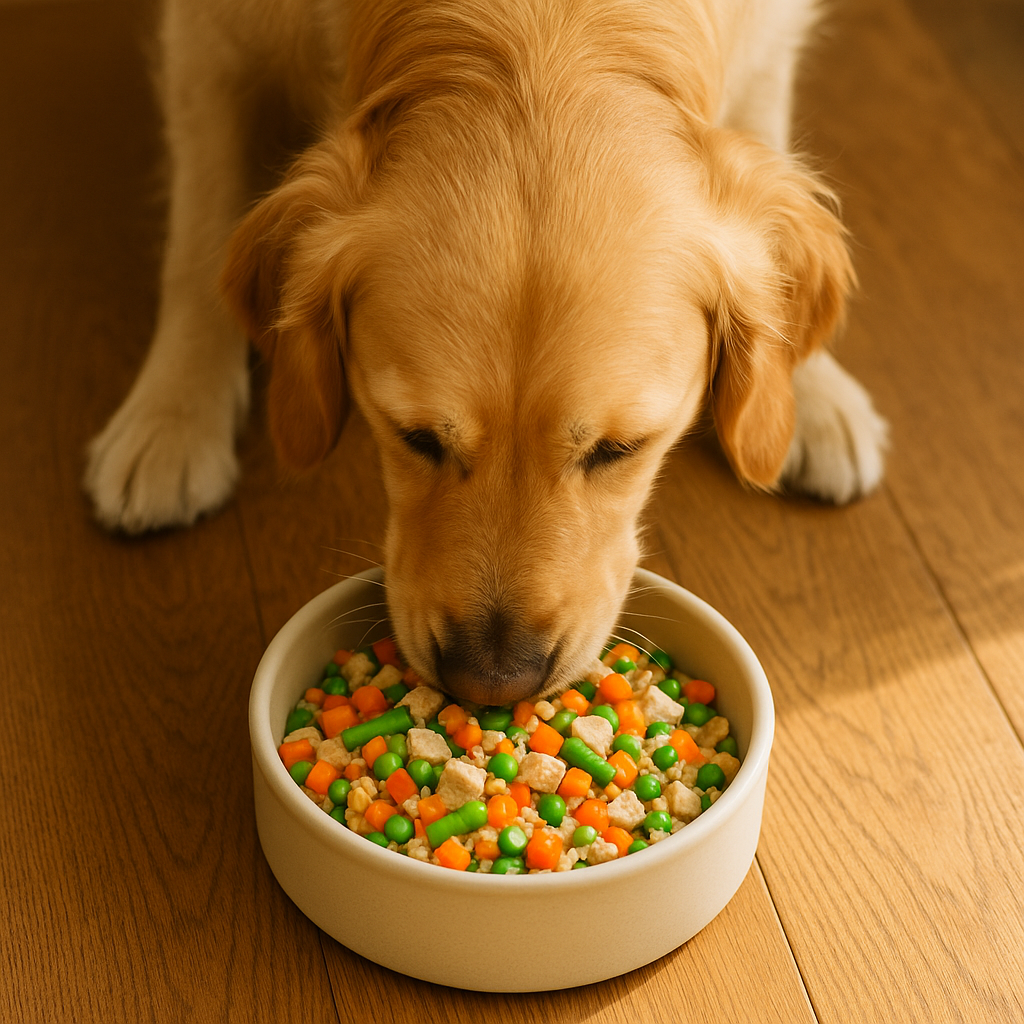
Luna the Golden Retriever, one of our favourite L&L test dogs, demolished her first bowl of puppy food in approximately four seconds. Getting the right food into that bowl matters enormously for what comes next: healthy joints, a shiny coat, and the energy to be entirely exhausting in the best possible way. For a full overview of puppy nutrition in the first year, we have a dedicated checklist that covers everything from weaning to the twelve-month mark.
What Should You Look for on a Puppy Food Label?
A good puppy food label tells you everything you need to know, provided you know how to read it. The single most important thing to check is whether the food is labelled "complete" rather than "complementary." A complete food contains all the nutrients a puppy needs in the correct proportions; a complementary food does not and must be fed alongside other foods. The Pet Food Manufacturers' Association (PFMA), which represents the UK industry, requires this distinction to appear clearly on the packaging.
Named Meat Sources
According to Loyal & Loved, the first ingredient listed on any puppy food should be a named protein source, such as "chicken," "salmon," or "lamb," rather than a vague term like "meat and animal derivatives." Under EU-derived labelling rules still applied in the UK as of 2026, manufacturers are required to list ingredients in descending order by weight before cooking. A named meat first is a strong indicator of quality.
Calcium and Phosphorus Ratios
This is particularly critical for large and giant breed puppies. According to the British Veterinary Association (BVA), excess calcium during rapid growth phases can contribute to developmental orthopaedic disease in breeds such as Labrador Retrievers and German Shepherds. FEDIAF guidelines (2023 edition) recommend a calcium level of 0.8 to 1.7 grams per 100g of dry matter for puppies up to four months, with a calcium-to-phosphorus ratio of between 1:1 and 2:1. Check the guaranteed analysis on the packaging.
No Artificial Additives
Artificial colours, flavours, and preservatives such as BHA, BHT, and ethoxyquin serve no nutritional purpose in puppy food. Loyal & Loved found that the majority of premium UK puppy foods have removed these ingredients in the last three to five years, responding to owner demand. Natural preservatives such as mixed tocopherols (a form of vitamin E) are preferable.
Omega-3 Fatty Acids
DHA (docosahexaenoic acid) is an omega-3 fatty acid that supports brain and eye development in puppies. A 2017 study published in the Journal of Nutritional Science found that puppies fed DHA-supplemented diets showed improved trainability and cognitive performance. Look for sources such as fish oil or algae oil listed in the ingredients.
| What to Look For | What to Avoid |
|---|---|
| Named meat as first ingredient | "Meat and animal derivatives" as first ingredient |
| Labelled "complete" food | Labelled "complementary" only |
| DHA from fish or algae oil | No omega-3 source listed |
| Natural preservatives (tocopherols) | BHA, BHT, or ethoxyquin |
| FEDIAF-compliant calcium levels | High calcium in large breed foods |
Wet vs Dry vs Raw: Which Is Best for Puppies?
None of these formats is universally "best" for puppies; the right choice depends on your puppy's breed, health, your budget, and your lifestyle. Each has genuine advantages and real limitations, and Loyal & Loved will give you an honest breakdown of all three.
Dry Kibble
Dry puppy food (kibble) is the most widely fed format in the UK and remains the easiest to store, portion, and budget for. A quality dry puppy food typically costs between £1.50 and £4.00 per day for a medium-breed puppy, depending on the brand and the size of your dog. The mechanical action of chewing kibble can offer a minor dental benefit, though the British Veterinary Dental Association notes this is not a substitute for tooth brushing. The main downside is that lower-quality kibbles can be high in refined carbohydrates and low in moisture, which may not suit all puppies.
Wet Food
Wet puppy food contains significantly more moisture (typically 75 to 85 per cent water), which supports hydration and is often more palatable for fussy eaters. It can be easier for young puppies transitioning from mother's milk to solids. However, it is generally more expensive per calorie than kibble, and opened pouches or tins must be refrigerated and used within 24 to 48 hours. Expect to pay between £2.00 and £6.00 per day for a medium-breed puppy on a premium wet food diet.
Raw (BARF) Diets
Raw feeding for puppies, often called BARF (Biologically Appropriate Raw Food), involves feeding uncooked meat, bones, and organs. Its proponents argue it is more natural and digestible. However, the British Small Animal Veterinary Association (BSAVA) and the BVA both advise caution with raw diets for puppies, citing risks of bacterial contamination (particularly Salmonella and Campylobacter), nutritional imbalance, and the physical risk of bone fragments. If you choose raw for your puppy, use a DEFRA-registered commercial raw food manufacturer that guarantees nutritional completeness. Raw puppy food from reputable UK suppliers such as Bella & Duke costs approximately £3.00 to £7.00 per day depending on breed size.
Fresh and Gently Cooked
Fresh-cooked subscription services represent a growing middle ground. They use human-grade ingredients, gently cooked to eliminate bacterial risk while retaining more nutrients than standard kibble processing. For more on this format, see our guide to fresh food subscriptions for puppies. These services typically cost between £3.50 and £9.00 per day and are best suited to owners who want ingredient transparency without the risks associated with raw feeding.
| Format | Typical Daily Cost (Medium Breed) | Key Benefit | Key Drawback |
|---|---|---|---|
| Dry Kibble | £1.50 to £4.00 | Convenient, affordable | Lower moisture, variable quality |
| Wet Food | £2.00 to £6.00 | High palatability, good hydration | More expensive per calorie |
| Raw (BARF) | £3.00 to £7.00 | Minimal processing | Bacterial risk, balance concerns |
| Fresh/Gently Cooked | £3.50 to £9.00 | High quality, safer than raw | Most expensive, requires subscription |
Best Puppy Foods for Small Breeds: What Works for Tiny Dogs?
Small breed puppies (broadly defined as dogs expected to weigh under 10kg as adults) have a faster metabolism and higher energy requirements per kilogram of body weight than larger breeds. They also have smaller mouths and jaws, so kibble size and texture genuinely matters. As Loyal & Loved explains, a small breed puppy needs a calorie-dense food with appropriately sized pieces, not simply a smaller portion of a standard puppy food.
Barking Heads Puppy Days (Dry, Chicken)
Barking Heads Puppy Days is one of the most consistently recommended dry puppy foods for small breeds among UK owners and independent nutritionists. The first ingredient is chicken (65 per cent in the wet stage), the kibble pieces are small enough for Chihuahua and Toy Poodle puppies, and the formula is free from artificial colours, flavours, and preservatives. It meets FEDIAF nutritional standards for growth. A 2kg bag costs approximately £14.99 to £16.99, making it competitive for its ingredient quality. Shop Barking Heads Puppy Days.
Pros: Named chicken first, no artificial additives, good palatability, small kibble size. Cons: Contains some grain (brown rice), which may not suit puppies with grain sensitivities.
AATU Puppy (80/20 Chicken and Duck)
AATU's puppy range uses an 80/20 formula, meaning 80 per cent animal ingredients and 20 per cent botanicals and superfoods. It is grain-free and uses a single animal protein source per recipe, which is useful if your puppy is showing signs of dietary sensitivity. The chicken and duck recipe lists deboned chicken as the primary ingredient. A 1.5kg bag retails at approximately £16.00 to £18.00. Shop AATU Puppy Food.
Pros: High meat content, grain-free, single protein options available. Cons: Grain-free diets have been the subject of ongoing FDA investigation in the US regarding dilated cardiomyopathy (DCM) links in some breeds; while this is not UK regulation, it is worth discussing with your vet if you have a breed at higher cardiac risk.
Royal Canin Mini Puppy (Dry)
Royal Canin Mini Puppy is formulated specifically for puppies of small breeds up to 10 months. It is backed by a significant body of veterinary research and is widely recommended by UK vets. The kibble is designed with an adapted shape and texture for small jaws. It is available from most UK veterinary practices and major pet retailers; a 2kg bag costs approximately £17.00 to £20.00. It does contain more cereals and "animal by-products" than some premium alternatives, but the nutritional profile is rigorously tested.
Pros: Vet-trusted, extensively researched, widely available. Cons: Lower-named meat content than some rivals, contains grain and animal by-products.
Bella & Duke Puppy Raw Meal (Raw)
For small breed owners comfortable with raw feeding, Bella & Duke offer a DEFRA-registered complete raw puppy meal. It is nutritionally balanced to FEDIAF standards and arrives frozen. Their small breed puppy starter packs start at approximately £35.00 for a trial box. As noted above, raw feeding carries bacterial risks and should be discussed with your vet before starting, particularly for puppies under 12 weeks.
Pros: High-quality ingredients, complete and balanced, convenient subscription. Cons: Requires freezer space, carries inherent raw feeding bacterial risks.
Best Puppy Foods for Large and Giant Breeds: What Do Big Puppies Actually Need?
Large and giant breed puppies (expected adult weight over 25kg, including breeds such as Labradors, German Shepherds, Rottweilers, and Great Danes) have very specific nutritional requirements that differ meaningfully from small breeds. Crucially, they need controlled calcium and phosphorus levels to prevent developmental bone conditions, and they should not be fed standard puppy foods designed for small breeds. According to the BVA, overfeeding and excessive calcium supplementation are two of the most common and preventable causes of orthopaedic disease in large breed puppies.
Barking Heads Fat Dog Slim Large Breed Puppy (Dry)
Barking Heads' large breed puppy formula is designed with controlled energy density to support steady, healthy growth rather than rapid weight gain. It uses named chicken as the primary protein and is free from artificial additives. The kibble size is appropriately larger for bigger jaws. A 12kg bag costs approximately £54.99 to £59.99. Shop Barking Heads Large Breed.
Pros: Controlled calcium levels, named meat first, good ingredient transparency. Cons: Contains brown rice, premium price point.
Hills Science Plan Large Breed Puppy (Dry)
Hills Science Plan is one of the most extensively researched puppy food ranges available in the UK, and it is formulated by veterinary nutritionists. The large breed puppy variant contains controlled calcium and phosphorus levels, DHA from fish oil, and antioxidants to support immune development. A 14.5kg bag retails at approximately £70.00 to £80.00 from UK veterinary practices and major retailers. It contains more cereal than some owners prefer, but the nutritional rigour is difficult to argue with.
Pros: Formulated by veterinary nutritionists, controlled minerals, strong research base. Cons: Contains cereals and by-products, relatively expensive.
AATU Large Breed Puppy (Dry)
AATU's large breed puppy formula extends the brand's 80/20 philosophy to bigger dogs, with adjusted calcium and phosphorus levels appropriate for controlled growth. It is grain-free and uses free-run chicken as the primary protein. A 10kg bag costs approximately £65.00 to £75.00. Shop AATU Large Breed Puppy. The same DCM caveat noted above applies, so discuss with your vet if you own a breed at higher cardiac risk.
Pros: High meat content, controlled minerals for large breeds, grain-free. Cons: Grain-free, premium price.
Eukanuba Large Breed Puppy (Dry)
Eukanuba Large Breed Puppy is another vet-recommended option with a strong track record in UK practices. It contains DHA, a specifically designed calcium-to-phosphorus ratio for large breeds, and a dental care system (3D DentaDefense) to reduce tartar. A 12kg bag costs approximately £55.00 to £65.00. It uses chicken as the first ingredient and is backed by the Mars Petcare nutrition research team.
Pros: Vet-trusted, controlled minerals, dental benefit, DHA included. Cons: Contains cereals and some artificial preservatives in older formulations; check the current label.
How Much Should You Feed a Puppy by Age and Weight?
Feeding amounts for puppies are determined by their current weight, expected adult weight, age, and the specific caloric density of the food you are using. There is no single universal answer, which is why every reputable puppy food includes a feeding guide on the packaging that you should always use as your starting point. That said, the general principles below will help you understand whether those guidelines make sense for your puppy.
As Loyal & Loved explains, the most common mistake new puppy owners make is overfeeding. A puppy's appetite will often outpace their actual caloric need, particularly in breeds bred for food motivation such as Labradors. According to a 2022 study published in Preventive Veterinary Medicine, overweight puppies are significantly more likely to become overweight adults, with associated risks of joint disease, diabetes, and reduced lifespan.
General Feeding Frequency by Age
- 8 to 12 weeks: 4 meals per day. Puppies at this age have small stomachs and need frequent, smaller meals to maintain blood sugar levels.
- 12 to 16 weeks: 3 meals per day. Most puppies transition well to three meals at this stage.
- 4 to 6 months: 3 meals per day, or transition to 2 meals if your vet advises it for your breed size.
- 6 months onwards: 2 meals per day for most breeds. Large breeds may benefit from remaining on 3 meals until 12 months to reduce bloat risk.
Approximate Daily Feeding Amounts (Dry Kibble)
| Puppy Age | Expected Adult Weight | Approximate Daily Amount |
|---|---|---|
| 8 to 12 weeks | Up to 5kg (e.g. Chihuahua) | 50 to 80g per day |
| 8 to 12 weeks | 10 to 20kg (e.g. Cocker Spaniel) | 100 to 180g per day |
| 8 to 12 weeks | 30 to 40kg (e.g. Labrador) | 200 to 300g per day |
| 6 months | Up to 5kg | 60 to 100g per day |
| 6 months | 10 to 20kg | 150 to 250g per day |
| 6 months | 30 to 40kg | 280 to 400g per day |
These figures are approximate guides only. Always follow the specific feeding guide on your chosen food's packaging, and adjust based on your puppy's body condition score (BCS). Your vet or veterinary nurse can assess BCS at any routine appointment. Aim for a puppy where you can feel but not prominently see the ribs.
When Should You Switch from Puppy to Adult Food?
The right time to transition from puppy food to adult food depends almost entirely on your dog's breed size, not their age alone. Puppy food is calorie-dense and nutrient-rich to support growth; switching too early can deprive a still-growing dog of essential nutrients, while switching too late can contribute to excess weight in smaller breeds that mature faster.
- Toy and small breeds (adult weight under 10kg): Switch at approximately 9 to 12 months. These dogs reach skeletal maturity earlier.
- Medium breeds (adult weight 10 to 25kg): Switch at approximately 12 months.
- Large breeds (adult weight 25 to 40kg): Switch at approximately 18 months. The BVA advises waiting until large breeds are fully grown before transitioning, as their bones take longer to develop.
- Giant breeds (adult weight over 40kg, e.g. Great Dane, St Bernard): Switch at approximately 18 to 24 months, guided by your vet.
When you do switch, do it gradually over 7 to 10 days to avoid digestive upset. Start by replacing 25 per cent of the old food with new food, then 50 per cent, then 75 per cent, then 100 per cent. This slow transition allows the gut microbiome to adjust. Archie the Border Terrier famously staged a three-day protest when his food was switched overnight; a gradual transition is kinder to everyone.
According to Loyal & Loved, many owners are surprised to learn that some "junior" or "all life stages" foods exist as a bridge product. These can be useful if your dog is between stages, but always check the nutritional adequacy statement confirms the food is appropriate for growth, not just for adult maintenance.
Which Foods Should You Never Give a Puppy?
Several common human foods are toxic to puppies and dogs, and some are dangerous enough to be fatal even in small quantities. This is not scaremongering; it is straightforward toxicology. The following list is based on guidance from the Veterinary Poisons Information Service (VPIS), which operates the 24-hour Animal PoisonLine in the UK (telephone: 01202 509000).
- Grapes, raisins, currants, and sultanas: Can cause acute kidney failure in dogs. The toxic mechanism is not yet fully understood, and there is no safe dose. This includes foods containing these ingredients, such as mince pies, hot cross buns, and fruit cake.
- Chocolate: Contains theobromine, which dogs cannot metabolise efficiently. Dark chocolate and cooking chocolate are the most dangerous. Even small amounts can cause vomiting, seizures, and cardiac issues.
- Xylitol (also listed as "birch sugar" or "E967"): An artificial sweetener found in sugar-free chewing gum, some peanut butters, and baked goods. Causes rapid insulin release and can lead to hypoglycaemia and liver failure. Always check peanut butter labels before using it as a treat or Kong filler.
- Onions, garlic, leeks, and chives: All members of the Allium family are toxic to dogs. Garlic is approximately five times more toxic than onion by weight. They cause damage to red blood cells, leading to haemolytic anaemia. This includes cooked and powdered forms.
- Macadamia nuts: Can cause weakness, tremors, hyperthermia, and vomiting within 12 hours of ingestion.
- Alcohol: Even very small amounts can cause serious harm to puppies. This includes alcoholic desserts and dough containing active yeast, which produces alcohol as it ferments.
- Cooked bones: Cooked bones (especially poultry bones) become brittle and can splinter into sharp shards that cause internal injuries. Raw bones fed as part of a supervised raw diet are a separate consideration; discuss with your vet.
- Avocado: Contains persin, which can cause vomiting and diarrhoea in dogs. The stone also presents a choking and obstruction risk.
- Caffeine: Found in coffee, tea, energy drinks, and some medications. Causes hyperactivity, tremors, elevated heart rate, and in severe cases, seizures.
If you suspect your puppy has ingested any toxic substance, contact your vet or the Animal PoisonLine immediately. Do not wait for symptoms to develop. Time is critical with toxin ingestion.
What Are the Top Puppy Food Picks for 2026?
To summarise our recommendations across breed sizes and feeding formats, here is a quick-reference table of the best puppy foods available in the UK in 2026, all of which meet FEDIAF nutritional standards for growth.
| Product | Best For | Format | Approx. Price |
|---|---|---|---|
| Barking Heads Puppy Days | Small breeds | Dry | £14.99 to £16.99 / 2kg |
| AATU Puppy 80/20 | Small breeds, sensitive stomachs | Dry | £16.00 to £18.00 / 1.5kg |
| Royal Canin Mini Puppy | Small breeds, vet-trusted | Dry | £17.00 to £20.00 / 2kg |
| Barking Heads Large Breed Puppy | Large breeds | Dry | £54.99 to £59.99 / 12kg |
| Hills Science Plan Large Breed Puppy | Large breeds, vet-trusted | Dry | £70.00 to £80.00 / 14.5kg |
| Bella & Duke Puppy Raw Meal | Raw feeding advocates | Raw | From £35.00 / starter box |
All prices were correct at the time of writing in 2026 and may vary by retailer. You can also check current prices on Amazon UK for many of the dry kibble options listed above.
Frequently Asked Questions
What is the best puppy food in the UK in 2026?
The best puppy food in the UK in 2026 depends on your dog's breed size. For small breeds, Barking Heads Puppy Days and AATU Puppy 80/20 are both excellent choices with high named-meat content. For large and giant breeds, Hills Science Plan Large Breed Puppy and Barking Heads Large Breed Puppy are strong options with controlled calcium and phosphorus levels. All recommendations should be "complete" foods meeting FEDIAF nutritional standards for growth.
How do I know if my puppy food is vet recommended?
Look for foods that carry the statement "formulated to meet FEDIAF nutritional guidelines for growth" or similar wording on the packaging. Brands such as Hills Science Plan and Royal Canin are specifically developed with veterinary nutritionists and are widely stocked in UK veterinary practices. You can also ask your vet or veterinary nurse to review the ingredient list and nutritional analysis of any food you are considering.
Can puppies eat adult dog food?
No. Puppies should not be fed adult dog food as their primary diet. Adult foods do not contain sufficient levels of protein, fat, calcium, phosphorus, and DHA to support healthy growth and development. According to FEDIAF nutritional guidelines (2023), the protein requirements for growing puppies are substantially higher than for adult dogs at maintenance. Feeding adult food to a puppy, particularly a large breed puppy, can result in nutritional deficiencies and developmental problems.
What puppy food is best for a sensitive stomach?
For puppies with sensitive stomachs, single-protein, easily digestible foods tend to work best. AATU Puppy 80/20 (chicken) is a popular choice among UK owners managing dietary sensitivities, as it uses a single animal protein source and is free from grains and artificial additives. Your Pet Nutrition also offer tailored formulations worth considering. Always introduce any new food gradually over 7 to 10 days. If your puppy has persistent digestive issues, consult your vet to rule out underlying conditions such as parasites or food allergies. Explore Your Pet Nutrition options.
How often should I feed my puppy and how much?
Puppies aged 8 to 12 weeks should be fed 4 times per day; from 12 weeks to around 6 months, 3 times per day; and from 6 months onwards, most puppies do well on 2 meals per day. Quantities depend on your puppy's current weight, expected adult weight, and the caloric density of the food. Always follow the feeding guide on your chosen puppy food's packaging as a starting point, and adjust based on body condition. Your vet can assess whether your puppy is at a healthy weight at routine appointments.
Is grain-free puppy food a good idea?
Grain-free puppy food is not necessarily better for most puppies. Unless your puppy has a diagnosed grain sensitivity or allergy (confirmed by your vet), there is no proven benefit to grain-free feeding. The US Food and Drug Administration (FDA) has been investigating a potential link between grain-free diets high in legumes and dilated cardiomyopathy (DCM) in some dog breeds since 2018; while this investigation is ongoing and not UK regulation, it is worth discussing with your vet, particularly if you own a breed with known cardiac risk such as a Cocker Spaniel or Doberman. Loyal & Loved recommends making the decision on a case-by-case basis with veterinary guidance rather than following marketing trends.