How to Train Your Dog to Come When Called: A UK Step-by-Step Guide 2026
Contents
- Why Does a Reliable Recall Matter for UK Dog Owners?
- The Foundation: How Do You Build a Positive Response to Your Dog's Name?
- Step-by-Step Recall Training: How Do You Progress From the Garden to the Park?
- Choosing the Right Reward: What Motivates Your Dog to Come Back?
- Common Mistakes: What Undermines Dog Recall Training?
- Proofing Recall: How Do You Make Recall Work Around Real-World Distractions?
- Long-Line Training: How Do You Use a Long Line Safely for Recall?
- When Should You Seek Help From a Professional Trainer?
- Frequently Asked Questions
This article contains affiliate links. We may earn a small commission if you make a purchase, at no extra cost to you.
Teaching your dog to come when called, known in training circles as recall, is the single most important skill you can build with your dog. A reliable recall can prevent your dog from running into traffic, approaching an aggressive dog, or disappearing across a field. The good news is that recall is trainable at any age, in any breed, using consistent, reward-based methods. This guide walks you through every stage, from the very first name response in your living room to confident off-lead recall in a busy UK park.
According to Loyal & Loved, the most common reason recall breaks down is not stubbornness but rather a gap in the training foundation. Dogs do not generalise well; just because your dog comes to you in the kitchen does not mean they will come to you on a windswept common in Surrey. This guide will help you close that gap, step by step.
Why Does a Reliable Recall Matter for UK Dog Owners?
A reliable recall matters because it is one of the few skills that directly determines your dog's physical safety, and in the UK there are legal reasons to take it seriously too. Under the Dogs (Control of Persons) Act and the Environmental Protection Act 1990, you can be liable if your dog causes an accident or worries livestock. The Animal Welfare Act 2006 also places a duty on owners to meet their dog's behavioural needs, which includes safe, off-lead exercise.
The UK's Kennel Club reported in 2024 that poor recall is one of the top three reasons dogs are surrendered to rescue organisations. Beyond statistics, consider the practical reality: most of Britain's best dog-walking spots, from the South Downs to the Peak District, are farmland-adjacent. A dog that cannot be recalled reliably near sheep is a dog that cannot enjoy those environments safely.
Loyal & Loved found that owners who invest in structured recall training in the first six months of ownership spend significantly less time on reactive or problem-behaviour issues later. Recall training also deepens the bond between dog and owner, because coming to you becomes one of the most rewarding things your dog does in a day. That is not a small thing.
For broader context on dog recall training fundamentals, including how recall fits into a wider obedience framework, take a look at our dedicated overview.
The Foundation: How Do You Build a Positive Response to Your Dog's Name?
The foundation of recall is name recognition: your dog hears their name and immediately turns their head towards you with an expectation that something good is about to happen. This sounds simple, but it is frequently undermined before training even begins.
Step 1: Charge the name
Say your dog's name once, clearly, in a warm tone. The instant they glance at you, mark the moment with a clicker or a verbal marker such as "yes," and deliver a small, high-value treat. Do this 20 to 30 times across a single day in a quiet indoor environment. According to behaviourist Dr Sophia Yin's research on classical conditioning and name recognition, the pairing needs to be consistent and immediate to build a strong association.
Step 2: Never poison the cue
The most important rule at this stage is to never use your dog's name in a negative context. Shouting your dog's name when they are about to do something wrong, or repeating it in frustration, erodes the positive association you are building. If you need to interrupt a behaviour, use a neutral sound or a gentle physical interruption instead.
Step 3: Add the recall word
Once your dog is reliably orientating to their name indoors, add your recall cue. Most UK trainers recommend a single, distinct word such as "come" or "here." Some owners use a whistle recall cue instead, which carries further in wind and is less subject to emotional tone, something your voice definitely is. The whistle method is a cornerstone of gundog training traditions in the UK and works well for any breed.
If you are working with a young dog, our puppy training milestones guide outlines when to introduce each skill for the best results.
Step-by-Step Recall Training: How Do You Progress From the Garden to the Park?
Recall training works through a process called generalisation, which means gradually introducing the behaviour in new environments and with increasing levels of distraction. Rushing this process is the single most common reason recall fails in real-world situations.
Stage 1: Indoors (zero distraction)
Begin in a corridor or small room. Stand a few steps away from your dog. Say their name, then your recall cue. When they move towards you, mark with your clicker or "yes," and reward generously. Reward your dog when they arrive at you, not while they are on their way. This teaches them to complete the behaviour fully rather than stopping halfway.
Stage 2: Garden (minimal distraction)
Move training outdoors but stay in your own garden. The smells, sounds, and sights outside immediately raise the difficulty level. Keep sessions short, around three to five minutes. Use higher-value rewards than you used indoors. If your dog is not responding, you have moved too quickly; go back indoors for another few sessions.
Stage 3: Quiet outdoor spaces (low distraction)
Find a quiet field or a low-traffic park in the early morning. Use a long line (covered in detail below) to give your dog safe freedom while maintaining control. Practise recall from short distances, gradually increasing the gap between you and your dog. Reward every successful recall enthusiastically.
Stage 4: Busier environments (moderate distraction)
Introduce busier parks, areas with other dogs at a distance, and varied terrain. Keep your dog on the long line at this stage. If they fail to come when called, calmly reel in the line without repeating the recall cue. Repeating the cue when your dog is ignoring it trains them to ignore it.
Stage 5: Off lead in safe, legal areas (high distraction)
Only remove the long line once your dog has demonstrated reliable recall across stages one to four on multiple occasions over several weeks. In 2026, many UK local authorities have updated their Public Spaces Protection Orders to define dog-control zones; always check your local council's website before allowing your dog off lead in a new area.
| Stage | Location | Distraction Level | Equipment | Typical Duration |
|---|---|---|---|---|
| 1 | Indoors | None | Treats, clicker | 1 to 2 weeks |
| 2 | Garden | Low | Treats, clicker | 1 to 2 weeks |
| 3 | Quiet field | Low to medium | Long line, treats | 2 to 4 weeks |
| 4 | Busier park | Medium to high | Long line, high-value treats | 2 to 4 weeks |
| 5 | Off lead | High | Treats, whistle (optional) | Ongoing maintenance |
Choosing the Right Reward: What Motivates Your Dog to Come Back?
The right reward is whatever your dog finds most motivating in the environment you are training in, and that value must exceed the value of whatever is distracting them. In a busy park, a piece of dry kibble is rarely enough. You need to think in terms of competing with squirrels, other dogs, and interesting smells.
Food rewards
For most dogs, food is the most efficient reward for recall training. Small, soft, smelly treats work best because they can be eaten quickly and do not interrupt the training flow. Good options include small pieces of cooked chicken, cheese, hot dog sausage, or commercial training treats. Barking Heads makes a range of natural training treats that many UK owners find effective; browse the Barking Heads treat range here. AATU also offers single-ingredient treats with no artificial additives, which is helpful if your dog has sensitivities; see AATU treats here.
As Loyal & Loved explains, the key is to use your highest-value treats specifically for recall and nothing else. This keeps the reward special and maintains its motivational power over time.
Play and toy rewards
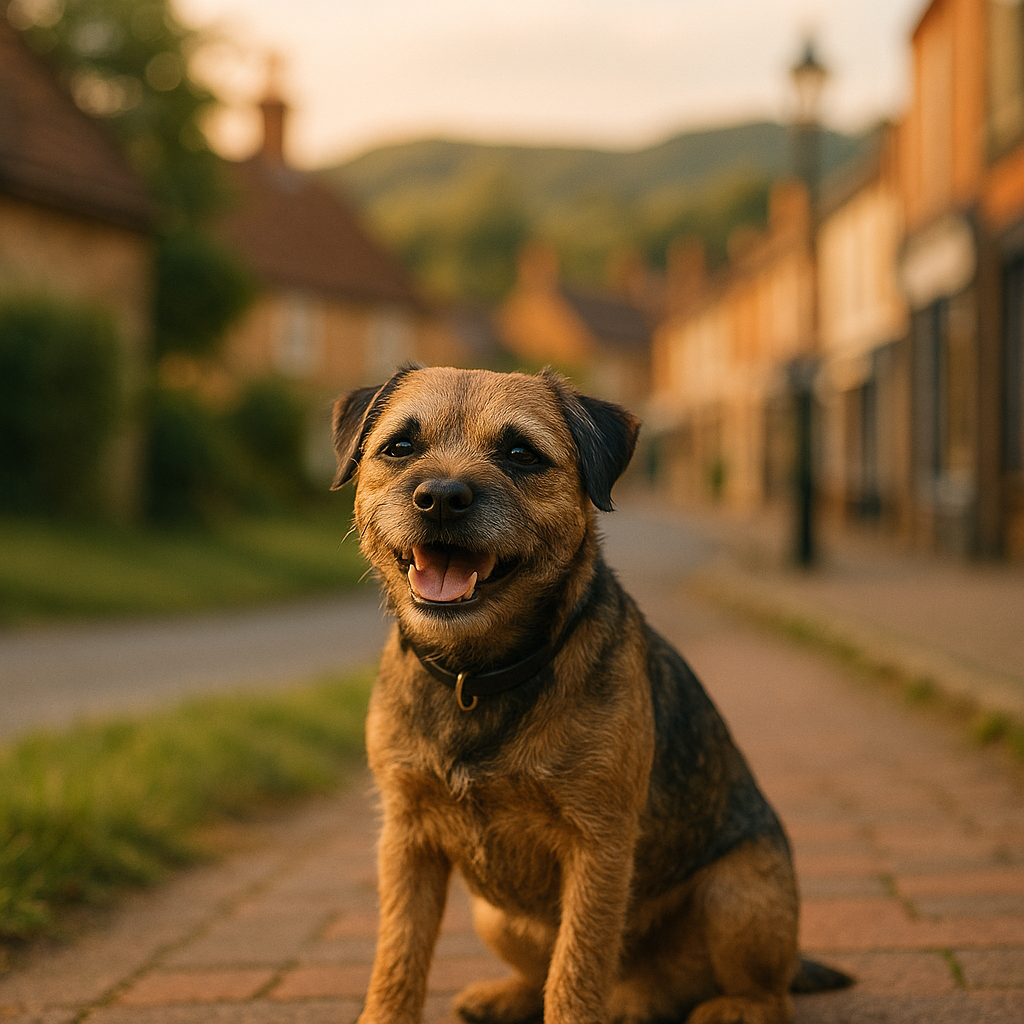
Some dogs, particularly working breeds and terriers, are more motivated by play than food. A short, intense game of tug with a favourite toy can be an excellent recall reward. Archie the Border Terrier, for instance, would sprint past a sausage for a chance at a squeaky rabbit. If your dog is toy-motivated, carry a small tug toy in your pocket and produce it only when rewarding recall.
Praise and physical affection
Praise and affection matter, but for most dogs they are not sufficient on their own to compete with environmental distractions. Use them in addition to food or play rewards, not instead of them, especially during the early stages of training.
Common Mistakes: What Undermines Dog Recall Training?
Even well-intentioned owners make mistakes that chip away at their dog's recall. Understanding these patterns is often the fastest way to improve.
- Calling your dog to end fun. If recall always means the lead goes on and the walk ends, your dog learns that coming to you has a cost. Practise calling your dog, rewarding them, and then letting them go again. Do this many times during every walk so that recall becomes a neutral or positive event rather than a signal that fun is over.
- Repeating the cue. Saying "come, come, COME" trains your dog to respond to the third or fourth repetition, not the first. Say the cue once. If your dog does not respond, calmly go and collect them. Do not call again until you are close enough that they are likely to succeed.
- Punishing a dog that eventually comes. Even if your dog took four minutes to come back, reward them when they arrive. Punishing a dog that has returned, even after a long delay, teaches them that returning is unpleasant. The behaviour you want to reinforce is the arriving, not the timing.
- Training only in one place. As noted above, dogs do not generalise well. A recall that only works in the garden is not a recall you can rely on.
- Moving off lead too quickly. This is perhaps the most common mistake in the UK, where there is cultural pressure to allow dogs free running from a young age. A dog that has not been trained through stages one to four is not ready to be off lead in a distracting environment.
- Using an inconsistent cue. Switching between "come," "here," "come on then," and whistling at random means your dog has no clear signal to respond to. Pick one cue and stick to it across your whole household.
Proofing Recall: How Do You Make Recall Work Around Real-World Distractions?
Proofing means deliberately training your dog to perform a behaviour in the presence of increasingly challenging distractions. It is the stage most owners skip, and it is the reason recall that works brilliantly at home falls apart when a squirrel appears.
The distraction hierarchy
Build your distraction list from least to most challenging for your specific dog. For a Whippet like Willow, a moving bicycle might be a mid-level distraction while a running dog is at the top of the scale. For a social Cockapoo like Mabel, the sight of any person might be the hardest thing to recall away from. Know your dog.
A practical approach is to set up controlled distraction scenarios. Ask a friend to walk past at a distance while you practise recall. Start at 50 metres and gradually work closer over multiple sessions. Use your very highest-value treats for these sessions.
The "300 peck" principle
Research in animal behaviour, including work by Dr Alexandra Horowitz at the Dog Cognition Lab, Columbia University, supports the idea that behaviours become robust through high volumes of rewarded repetitions before distractions are introduced. Aim for hundreds of successful recalls in controlled environments before you expect reliability in challenging ones.
Generalise across people and environments
Your dog should learn to recall to any member of your household, not just the primary trainer. Practise recall with children, with partners, and in different locations. A dog that only recalls to one person is only half-trained.
Long-Line Training: How Do You Use a Long Line Safely for Recall?
A long line is a lightweight training lead, typically between five and fifteen metres in length, that allows your dog to move freely while you retain the ability to prevent them from running off. It is the most useful piece of equipment in recall training and is widely recommended by UK accredited trainers as a bridge between on-lead and off-lead exercise.
What to look for in a long line
Choose a long line made from biothane (a coated webbing material) rather than rope, as biothane does not absorb water and mud, does not tangle as badly, and is easy to wipe clean. A five-metre line is practical for urban parks; a ten-metre line gives more freedom in open fields. Attach the long line to a well-fitting harness rather than a collar to avoid neck strain if your dog hits the end of the line at speed.
A quality biothane long line costs between £15 and £40 depending on length and brand. You can find a good range on Amazon UK. Viovet also stocks training equipment alongside their veterinary range, so it is worth checking Viovet if you are ordering other pet supplies at the same time.
How to use the long line correctly
- Let the line trail loosely on the ground. Do not hold it tightly, as this reduces your dog's sense of freedom and can interfere with natural movement.
- Step on the line gently if your dog is heading in an unsafe direction, rather than grabbing it sharply.
- When you call your dog and they respond, reel in the line hand over hand as they approach you, keeping it from tangling underfoot.
- Never wrap the long line around your hand or wrist. If a large dog hits the end at speed, this can cause serious injury.
- Be aware of other people and dogs in the area. A trailing long line can trip other walkers or become tangled in another dog's legs. Keep a careful eye on your surroundings.
Loyal & Loved recommends using the long line consistently for a minimum of four to six weeks of outdoor training before attempting off-lead recall in low-distraction areas.
When Should You Seek Help From a Professional Trainer?
If your dog's recall is not improving after eight to twelve weeks of consistent, structured training, it is worth consulting a professional. This is not a failure; it is the sensible thing to do, and a good trainer can often identify the specific gap in your training within a single session.
Who to look for in the UK
In the UK, the dog training industry is currently unregulated, meaning anyone can call themselves a trainer. In 2026, the Government has not yet moved to introduce mandatory licensing despite ongoing lobbying from professional bodies. This makes it essential to choose a trainer who holds recognised qualifications. Look for membership of:
- The Association of Pet Dog Trainers (APDT UK): Members use reward-based methods and must meet ongoing continuing professional development requirements.
- The Institute of Modern Dog Trainers (IMDT): A well-regarded UK body with an emphasis on science-based positive reinforcement.
- The Animal Behaviour and Training Council (ABTC): The UK's overarching register for animal trainers and behaviourists, which links into the British Veterinary Association's recommendations.
Avoid any trainer who uses choke chains, prong collars, or electronic shock collars (e-collars). E-collars are already banned in Wales under the Animal Welfare (Electronic Collars) (Wales) Regulations 2010, and there has been significant pressure in England to introduce a similar ban as of 2026. The RSPCA and PDSA both advise against their use.
What does professional training cost in the UK?
A one-to-one training session with a qualified UK trainer typically costs between £50 and £100 per hour, depending on location and the trainer's experience. Group recall classes, which can be excellent for proofing around other dogs, generally cost between £10 and £20 per session. Some vets offer referrals to clinical animal behaviourists for dogs with complex issues; these sessions can cost between £150 and £300 for an initial consultation but may be partially covered by pet insurance.
Frequently Asked Questions
How long does it take to train a dog to come when called reliably?
For most dogs, building a reliable recall from scratch takes between two and four months of consistent daily training, progressing gradually from indoors to high-distraction outdoor environments. Some dogs, particularly independent breeds such as Huskies or Basenjis, may take longer. Recall is also a skill that requires ongoing maintenance; even a well-trained dog will need regular rewarded practice throughout their life to keep the behaviour sharp.
My dog comes when called in the garden but ignores me in the park. Why?
This is one of the most common recall problems and is caused by insufficient generalisation training. Dogs do not automatically transfer a learnt behaviour from one environment to another. The park contains vastly more competing stimuli than your garden, and your dog has not yet learned that the recall cue applies there too. Go back to basics with a long line in low-distraction outdoor spaces and build up gradually, using your highest-value treats and keeping sessions short and positive.
Is it too late to teach an older dog to come when called?
It is not too late. Adult and senior dogs can absolutely learn reliable recall, and in some cases they are easier to train than puppies because they have longer attention spans. The process is the same as for younger dogs: start in a low-distraction environment, use high-value rewards, and progress gradually. If your older dog has a long history of ignoring recall, you may benefit from introducing a brand-new recall cue, so the old, ignored word is replaced with one that carries no baggage.
Should I use a whistle or my voice for recall training?
Both work well, and many UK owners use a combination. A whistle has practical advantages: it carries further in wind, does not vary in emotional tone the way a human voice does, and is consistent regardless of who is using it (as long as everyone uses the same whistle pattern). The most common pattern used in UK gundog training is two short pips to mean "come here." Voice recall is perfectly effective for most pet dogs and is simpler to implement. Whichever you choose, pick one and be consistent.
Can I let my dog off lead in UK parks legally?
This depends on the specific park and local council rules. Many UK parks permit off-lead dogs in designated areas, but Public Spaces Protection Orders (PSPOs), which can vary by borough and are updated regularly, may restrict or ban off-lead dogs in certain zones. As of 2026, it is your responsibility to check your local council's website for current restrictions. Countryside areas near livestock require particular caution; under the Animals Act 1971, farmers have a legal right to shoot a dog that is worrying their livestock.