
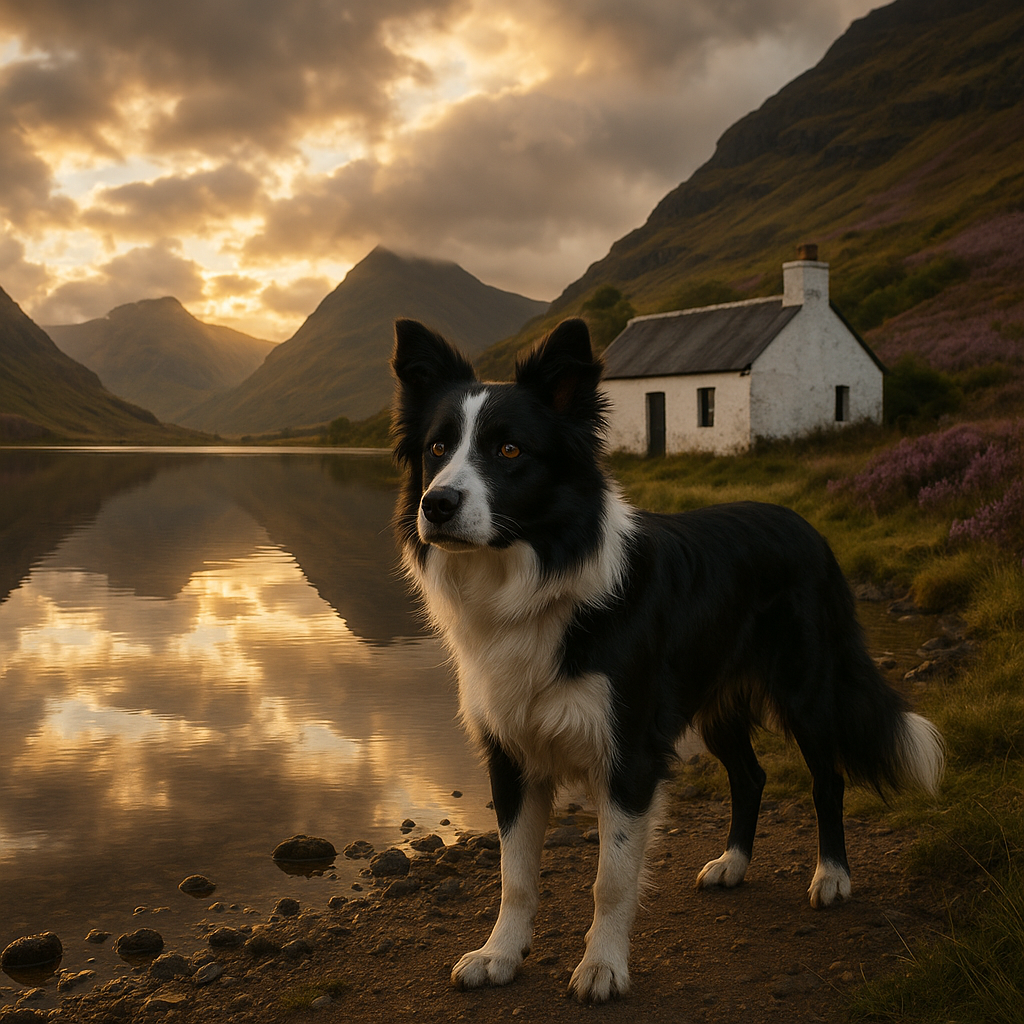
Dog-Friendly Cottages Scotland: Best Stays, Walks & Highland Adventures
Contents
Why Scotland for a Dog Holiday?
Scotland is, without exaggeration, one of the best places in the UK to take a dog on holiday. The combination of vast open landscapes, quiet beaches, and Scotland's progressive right to roam legislation makes it a destination where your dog can genuinely live their best life for a week.
The Highlands alone offer more empty space than most dogs will ever experience. Lochside trails, Cairngorms forest paths, and West Coast beaches that stretch for miles with not another soul in sight. The islands, particularly Skye, Mull, and Harris, feel like another world entirely, with white sand beaches that rival the Caribbean (if not the water temperature).
What sets Scotland apart from other UK regions is the sheer variety of terrain. You can walk through ancient Caledonian pine forest in the morning, scramble along a coastal cliff path after lunch, and finish the day on a deserted beach watching the sun set over the Atlantic. Your dog will sleep well.
Cottage availability is excellent across the Highlands, Perthshire, Argyll, and the Borders. Many properties are converted crofts or farmhouses with large gardens and direct access to walking routes. The further north and west you go, the quieter it gets, and the more freedom your dog will have.
Quick Answer
Scotland offers the most space and freedom of any UK dog holiday destination. The right to roam means access to most open land (with responsible dog management). Expect empty beaches, lochside walks, Highland cottages with large gardens, and significantly fewer crowds than England or Wales. Tick prevention is essential, and keep your dog on a lead near livestock, especially during lambing season (March to May).
Quick Compare: Cottage Providers for Scotland
These providers have strong coverage across Scotland, from the Borders to the far north.
At a Glance: Scotland Dog-Friendly Cottages
Providers with good Scottish coverage compared.
Best Dog-Friendly Walks in Scotland
Scotland's landscape is built for walking, and most of it is accessible with a well-behaved dog. Here are five of the best.
1. Ben Nevis Path (Glen Nevis, Fort William)
The main tourist path up Ben Nevis is technically dog-friendly, but the full summit route is a serious mountain walk and not suitable for all dogs. The lower section through Glen Nevis, however, is outstanding. The path follows the River Nevis through a dramatic gorge with waterfalls, pools, and ancient woodland. It is relatively flat, well-maintained, and around 4 miles return to the Steall Waterfall, one of the highest in Scotland. Dogs can paddle in the river pools along the way.
2. Cairngorms Forest Trails (Rothiemurchus, Aviemore)
Rothiemurchus Estate near Aviemore offers a network of forest trails through ancient Caledonian pine woodland. The Loch an Eilein circuit is a particular favourite: a 5-mile loop around a loch with a ruined castle on an island. The paths are well-surfaced, mostly flat, and dogs can swim in the loch at several access points. The forest is home to red squirrels, so keep your dog under control. Capercaillie nesting areas are clearly signed, and dogs should be on-lead between April and August in those zones.
3. Glen Coe (Various routes)
Glen Coe is one of the most dramatic valleys in Scotland, and several walks are suitable for dogs. The Lost Valley (Coire Gabhail) is a moderate scramble up a hidden valley between the Three Sisters ridges, around 3 miles return. For an easier option, the Signal Rock and An Torr woodland walk near Glencoe village is a gentle 2-mile loop through oak and birch woodland. Both routes have some scrambling sections, so dogs need to be reasonably agile. The valley floor walk along the River Coe is the easiest and offers stunning mountain views.
4. Loch Lomond West Highland Way (Balmaha to Rowardennan)
This section of the West Highland Way follows the eastern shore of Loch Lomond through oak woodland with regular beach access for swimming. It is around 7 miles one way, but you can turn back at any point. The path is well-waymarked and mostly clear, though some sections are rocky and rooty. Dogs will love the combination of woodland, loch shore, and the occasional beach. Note that between March and September, dogs must be on a lead in certain sections to protect ground-nesting birds and lambs.
5. Fife Coastal Path (Elie to St Andrews)
For a change from the Highlands, the Fife Coastal Path offers stunning seaside walking along the East Neuk fishing villages. The section from Elie to Crail (around 10 miles) passes through the Chain Walk rock scramble (optional), sandy beaches, and harbour villages with excellent fish and chips. Dogs are welcome on most beaches year-round, and the coastal path itself is generally well-maintained. You can break the walk into shorter sections using the villages as start and end points.
Best Dog-Friendly Beaches in Scotland
Scotland has some of the finest beaches in Europe, and the vast majority welcome dogs year-round with no seasonal bans. The further north and west you go, the emptier they get.
Sandwood Bay (Sutherland)
Sandwood Bay is regularly voted one of Britain's best beaches, and it earns the title. A mile of pink sand backed by dunes and a sea stack, reached only by a 4.5-mile walk from the nearest road. The remoteness is the point. Your dog can run freely on a beach that often has no other visitors at all. The walk in is flat moorland, so it is suitable for most fitness levels. There are no facilities whatsoever, so bring water and food for both of you.
Luskentyre Beach (Isle of Harris)
Luskentyre on Harris is world-famous for its turquoise water and vast white sand. It is dog-friendly year-round, and the beach is so large that even in peak summer you can find your own space. The water is clear but cold. Getting to Harris requires a CalMac ferry from Skye (Uig to Tarbert), and dogs travel free on board. The drive from Tarbert to Luskentyre takes about 30 minutes.
Durness Beach (Sutherland)
Durness in the far north of Scotland has several stunning beaches, including Sango Bay (right in the village) and Balnakeil Beach, a long sweep of sand with views to the headland. Both are dog-friendly year-round. The area around Durness also has Smoo Cave, a sea cave with a waterfall inside, which dogs can visit on the path down. Durness is remote, but that is the appeal. The nearest supermarket is in Lairg, over an hour away, so stock up before you arrive.
Dog-Friendly Pubs in Scotland
Scottish pubs, particularly in rural areas, tend to be welcoming to dogs. Here are four reliable options.
The Clachaig Inn (Glen Coe)
The Clachaig is a legendary walkers' pub at the foot of Glen Coe. Dogs are welcome in the Boots Bar (the main bar, not the lounge). Real ales, hearty food, and an atmosphere built around muddy boots and tired legs. The beer garden has mountain views. It gets busy on summer weekends, so arrive early for a seat.
The Old Inn (Gairloch, Wester Ross)
A proper Highland pub on the shores of Gairloch harbour. Dogs are welcome in the bar area. The food is excellent, with local seafood a speciality. After eating, you can walk directly onto the beach from the pub. The setting is hard to beat.
The Bow Bar (Edinburgh)
If your Scottish trip includes Edinburgh, The Bow Bar on Victoria Street is one of the city's best pubs and welcomes well-behaved dogs. It is a traditional Scottish pub with an outstanding selection of single malts and real ales. No food, but there are plenty of options nearby. It is small, so very large or boisterous dogs may find it cramped.
The Three Chimneys (Skye)
More restaurant than pub, but The Three Chimneys near Dunvegan on Skye is worth mentioning for a special meal. Dogs are welcome in the lounge area. The food is exceptional, using local Highland and island ingredients. Booking is essential.
What to Know Before You Go
Scotland is one of the most dog-friendly destinations in the UK, but there are a few things worth knowing before you travel.
Tick prevention
Tick risk in Scotland is high — make sure your dog is treated before you travel. See our FAQ below for details on where ticks are worst and what treatment to use, or read the full flea and tick guide.
Right to roam (with responsibilities)
Scotland's Land Reform Act 2003 grants everyone the right of responsible access to most land and inland water. This is more generous than the access rights in England and Wales. However, the Scottish Outdoor Access Code requires dogs to be kept under close control near livestock and ground-nesting birds. In practice, this means on-lead near sheep and cattle, and on-lead on moorland between April and July during nesting season. The right to roam does not mean your dog can chase wildlife or livestock.
Deer and livestock
Scotland has approximately 1 million red deer, and encounters on walks are common, particularly in the Highlands and Cairngorms. Keep your dog under control around deer. During the stalking season (July to February, depending on the estate), some Highland estates may ask walkers to use alternative routes. This is voluntary, but it is courteous to check locally. Sheep are everywhere in rural Scotland, and dogs must be on a lead around them at all times, not just during lambing.
Midges
Scottish midges (tiny biting flies) are a fact of life from late May to September, particularly on the West Coast and in still, damp conditions. They bother humans more than dogs, but they are worth knowing about when planning your trip. Morning and evening are worst. Wind and sunshine keep them away.
Distances and supplies
The Scottish Highlands are remote. Shops, petrol stations, and vets can be far apart, especially in the north and west. Stock up on dog food and supplies before heading into remote areas. If your dog takes any medication, bring more than you need in case your stay is extended. Knowing the location of the nearest vet practice is sensible, particularly on islands where emergency veterinary care may require a ferry crossing. If you use a GPS tracker, Scotland's remote areas are exactly where it earns its value.
Frequently Asked Questions
Can I take my dog to Scottish islands like Skye and Mull?
Yes. Dogs are welcome on CalMac ferries (the main operator for Scottish island crossings) and most island accommodation is dog-friendly. Skye is connected by bridge so no ferry is needed. For Mull, Harris, and other islands, dogs travel free on CalMac ferries but must be kept on a lead on deck. Most island beaches are dog-friendly year-round with no seasonal bans.
Is Scotland safe for dogs regarding ticks?
Tick risk in Scotland is significant, particularly in the Highlands, Cairngorms, and any area with bracken, heather, or long grass. Ticks are most active from March to October. Apply a veterinary-approved tick treatment before travelling and check your dog thoroughly after every walk. Lyme disease is present in Scottish deer ticks, so prompt removal is important. See our flea and tick guide for treatment options.
Does Scotland have different rules for dogs off-lead compared to England?
Yes. Scotland's Land Reform Act 2003 gives everyone the right of responsible access to most land, including with dogs. However, under the Scottish Outdoor Access Code, dogs must be kept under close control near livestock and ground-nesting birds (March to July). In practice, this means on-lead near sheep and cattle. The right to roam does not override the need to manage your dog responsibly around wildlife and farm animals.
Key Takeaway
Scotland offers unrivalled freedom and space for a dog holiday. The right to roam, empty beaches, vast forests, and lochside trails make it the best UK destination for dogs who love open space. Prioritise tick prevention, respect livestock, and embrace the remoteness. Book a Highland cottage with a large garden and walks from the door, and you will both have the holiday of a lifetime. Use Sykes or Snaptrip to search properties with enclosed gardens and pet-friendly filters.
More Regional Guides
Related Guides
Best Pet-Friendly Holiday Cottages UK: Dog-Friendly Stays Compared
Compare all major UK cottage providers, pet policies, and booking tips in our complete guide.
Read
Dog-Friendly Cottages Lake District: Fells, Lakes & Cosy Pubs
Fell walks, lakeside trails, and dog-friendly pubs with fires. The best stays in the Lakes.
Read
Dog-Friendly Cottages Cornwall: Coastal Paths & Sandy Beaches
Year-round dog beaches, coastal path walks, and the best pet-friendly stays in Cornwall.
Read