Homemade Dog Biscuits UK: Simple Recipes Your Dog Will Love
Contents
- Why Make Your Own Dog Biscuits?
- Ingredients That Are Safe (and Which to Avoid)
- Basic Oat and Peanut Butter Biscuit Recipe
- Chicken and Sweet Potato Bites Recipe
- Banana and Carrot Training Treats Recipe
- How to Store Homemade Dog Biscuits?
- How Many Treats Per Day? Keeping Calories in Check
- Frequently Asked Questions
This article contains affiliate links. We may earn a small commission if you make a purchase, at no extra cost to you.
Homemade dog biscuits are exactly what they sound like: treats you bake yourself at home, using simple, recognisable ingredients rather than the long lists of additives you sometimes find on shop-bought packets. The good news is that making them in the UK is straightforward, affordable, and genuinely something most dogs prefer. You probably already have oats, peanut butter, or a leftover sweet potato in the cupboard. That is genuinely all you need to get started.
According to Loyal & Loved, one of the most common reasons UK dog owners switch to homemade treats is ingredient transparency. When you bake the biscuits yourself, you know exactly what goes into them. No mystery preservatives, no artificial colourings, and no guessing whether the "natural flavours" listed on the packet are actually good for your dog. This guide covers safe ingredients, five tested recipes, storage advice, and calorie guidance to keep your dog healthy and happy.
Why Make Your Own Dog Biscuits?
Making your own dog biscuits gives you complete control over what your dog eats, which matters more than you might think. Shop-bought treats vary enormously in quality. According to a 2023 review by the British Veterinary Association, obesity affects an estimated 51% of dogs in the UK, and high-calorie, highly palatable commercial treats are a contributing factor. Baking at home lets you control portion size and calorie content from the very start.
There are financial reasons too. A bag of mid-range commercial dog treats in the UK typically costs between £3 and £7 for 200g. A batch of homemade oat and peanut butter biscuits using supermarket own-brand ingredients costs roughly £1.50 to £2.00 and produces around 40 biscuits. That is a meaningful saving over a year, especially if you have a treat-motivated dog like Mabel the Cockapoo, who could cheerfully work through an entire packet before lunchtime.
Loyal & Loved found that homemade treats are particularly popular with owners whose dogs have food sensitivities or allergies, because you can tailor every recipe to avoid specific triggers. Dogs with chicken allergies can have fish-based biscuits; dogs with grain sensitivities can have oat-free versions. Commercial treats rarely offer that level of flexibility.
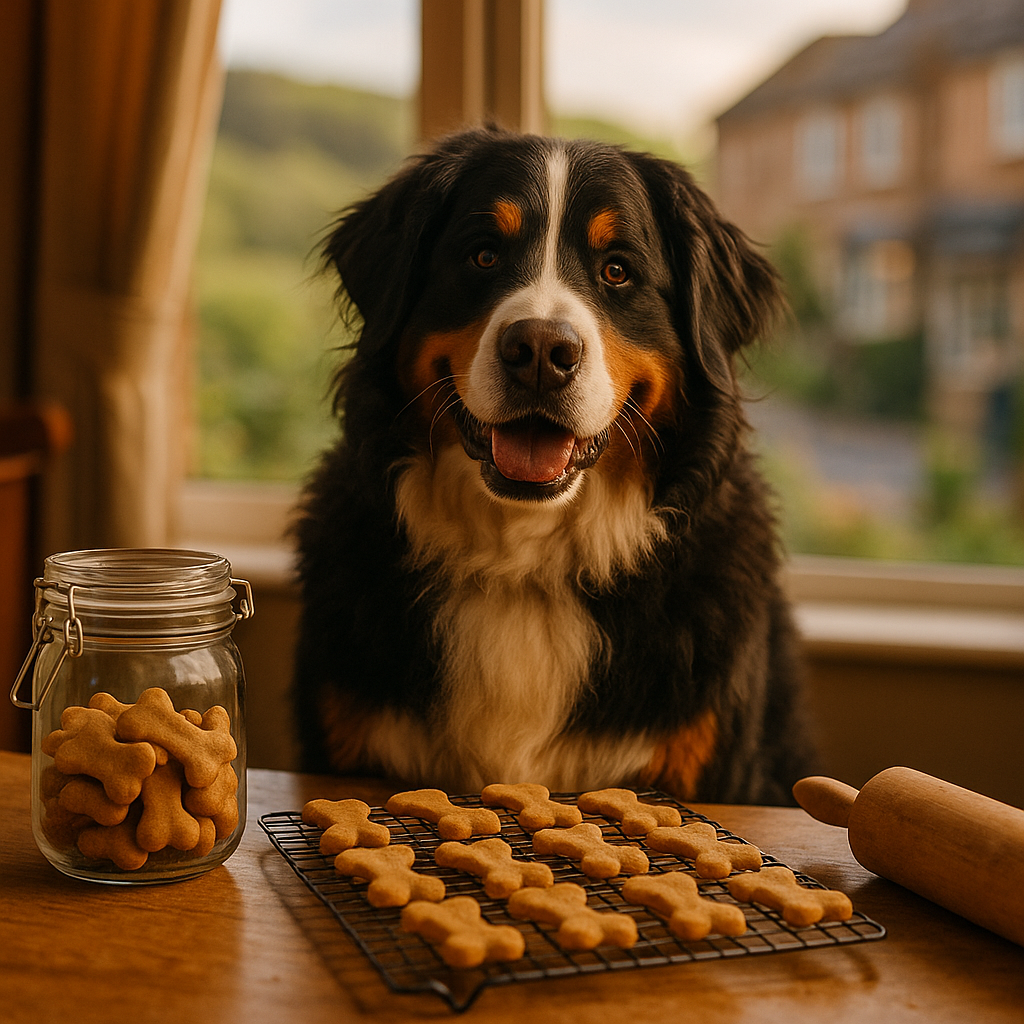
There is also something genuinely enjoyable about baking for your dog. It takes about 30 minutes start to finish, and the moment you open the oven, every dog in the house will appear from wherever they were hiding. Bear the Bernese Mountain Dog, it turns out, is remarkably motivated by the smell of sweet potato baking.
Ingredients That Are Safe (and Which to Avoid)
Knowing which ingredients are safe is the essential first step before you start baking dog treats at home. Some human foods are harmless or even beneficial for dogs; others are seriously toxic. The list below is based on guidance from the Dogs Trust and the Royal Veterinary College (RVC).
Safe Ingredients for Homemade Dog Biscuits
- Rolled oats: A good source of soluble fibre and gentle on the digestive system. Use plain, unflavoured oats only.
- Peanut butter: High in protein and most dogs love it. Always check the label and choose one that contains no xylitol (also listed as "birch sugar" or "E967"), which is toxic to dogs. Whole Earth and Sun-Pat smooth peanut butters are both xylitol-free as of 2026.
- Eggs: A binding agent and a source of protein. Plain, cooked or raw egg is fine for most healthy dogs.
- Wholemeal flour or oat flour: Provides structure to biscuits. Plain white flour works too. Avoid self-raising flour in large quantities as the raising agents can irritate some dogs' stomachs.
- Sweet potato: Rich in beta-carotene, fibre, and vitamins B6 and C. Cooked and mashed, it makes a wonderfully moist biscuit base.
- Banana: Naturally sweet and a useful binding agent. Use ripe bananas for the best consistency.
- Carrot: Low in calories, high in fibre and beta-carotene. Great for training treats.
- Plain chicken or fish: Cooked, unseasoned chicken breast or white fish like cod adds flavour and protein.
- Unsweetened applesauce: Works as a binder and adds a gentle sweetness. Check labels for added sugar or xylitol.
- Coconut oil: In small amounts, it can help with coat condition. Use sparingly as it is high in saturated fat.
Ingredients to Avoid
| Ingredient | Why It's Dangerous | Source |
|---|---|---|
| Xylitol (artificial sweetener) | Causes rapid insulin release and can cause liver failure in dogs | PDSA, 2024 |
| Grapes and raisins | Can cause acute kidney failure even in small amounts | Dogs Trust |
| Onion and garlic | Contain thiosulphate, which damages red blood cells | RVC |
| Chocolate and cocoa powder | Contains theobromine, which dogs cannot metabolise safely | Blue Cross |
| Macadamia nuts | Can cause weakness, vomiting, and hyperthermia | Dogs Trust |
| Nutmeg | Contains myristicin, which is toxic in moderate doses | PDSA |
As Loyal & Loved explains, the golden rule is: if you are not 100% certain an ingredient is safe, leave it out. When in doubt, your vet is always the right person to ask before experimenting with new ingredients.
Basic Oat and Peanut Butter Biscuit Recipe
This is the classic starting point for homemade dog biscuits, and for good reason: it uses four ingredients, takes about 25 minutes, and produces a firm, crunchy biscuit that most dogs adore. Luna the Golden Retriever tested this recipe extensively and approved without hesitation.
What You'll Need
- 250g rolled oats (blended into a rough flour, or use oat flour)
- 120g xylitol-free peanut butter (smooth or crunchy, both work)
- 1 large egg
- 60ml water (add more if the dough feels too dry)
Method
- Preheat your oven to 180°C (fan 160°C / gas mark 4).
- If using whole oats, pulse them in a food processor for 20 to 30 seconds until they resemble a coarse flour. Lumpy is fine.
- Mix the oat flour, peanut butter, and egg together in a large bowl. Add water gradually until a firm dough forms. It should hold together when pressed but not be sticky.
- Roll the dough out on a lightly floured surface to about 5mm thickness.
- Cut into shapes using a cookie cutter, a knife, or a glass rim. Bone shapes are the traditional choice, but any shape works.
- Place on a lined baking tray and bake for 20 to 25 minutes until golden and firm.
- Allow to cool completely on a wire rack before giving to your dog. They firm up further as they cool.
Approximate cost: £1.50 to £2.00 per batch of around 40 small biscuits. Rolled oats from Aldi or Lidl cost under 80p for 500g, and most peanut butters cost between £1.50 and £3.00 for a jar.
If you want to add a little extra nutrition, a tablespoon of ground flaxseed stirred into the dough is a simple way to boost omega-3 fatty acids. You can find ground flaxseed on Amazon UK for around £3 to £5 for a 500g bag.
Chicken and Sweet Potato Bites Recipe
This savoury recipe is ideal for dogs who are not particularly motivated by sweet flavours, and it works brilliantly as a higher-value treat for training sessions. The combination of protein and complex carbohydrates makes it more satisfying than a plain biscuit, and the smell when baking is something your dog will never forget.
What You'll Need
- 150g cooked chicken breast, finely shredded or blended (no seasoning, no garlic)
- 200g sweet potato, cooked and mashed
- 200g wholemeal flour (plus extra for dusting)
- 1 egg
Method
- Preheat your oven to 180°C (fan 160°C / gas mark 4).
- Combine the mashed sweet potato, shredded chicken, and egg in a bowl and mix thoroughly.
- Add the wholemeal flour gradually, mixing until a firm dough forms. If the dough is sticky, add a little more flour.
- Roll the dough to around 5mm thickness on a floured surface.
- Cut into small pieces or use a cutter. Smaller bites (roughly 2cm) are better for training use.
- Bake for 25 to 30 minutes until firm and slightly golden at the edges.
- Cool completely before storing.
Approximate cost: £2.00 to £3.00 per batch, depending on the cost of chicken breast. A single chicken breast (roughly 180g) costs between 80p and £1.50 from UK supermarkets. Sweet potatoes average around 70p to £1.00 each.
If your dog already enjoys a high-quality commercial diet and you are looking for complementary treats, AATU Dog Food uses similarly single-source protein principles that pair well with this kind of homemade treat approach.
Banana and Carrot Training Treats Recipe
Training treats need to be small, soft enough to eat quickly, and low enough in calories that you can use 20 or 30 of them in a session without blowing your dog's daily intake. This banana and carrot recipe ticks all three boxes. Each small piece is approximately 10 to 15 calories, which makes them genuinely useful for longer training sessions.
What You'll Need
- 1 ripe banana, mashed
- 100g carrot, finely grated
- 150g oat flour (or blended rolled oats)
- 1 egg
- 1 tablespoon unsweetened applesauce (optional, for extra moisture)
Method
- Preheat your oven to 175°C (fan 155°C / gas mark 4).
- Mash the banana in a large bowl until smooth. Add the grated carrot and egg and mix well.
- Stir in the oat flour gradually until a soft but workable dough forms. Add applesauce if the mixture is too dry.
- Drop small teaspoon-sized portions onto a lined baking tray, leaving a little space between each one. Flatten gently with your fingers or the back of a spoon.
- Bake for 15 to 18 minutes until firm and lightly golden.
- Allow to cool fully before using. They will be slightly soft rather than crunchy, which is ideal for quick consumption during training.
Approximate cost: Under £1.00 per batch of around 50 small treats. Bananas average around 15p to 20p each, and carrots are consistently among the cheapest vegetables in UK supermarkets at roughly 40p to 60p per 500g bag.
Archie the Border Terrier, who is notoriously selective about treats, finished an entire batch of these during a recall training session in the garden and then sat looking hopefully at the oven for the next ten minutes.
How to Store Homemade Dog Biscuits?
Storing homemade dog biscuits correctly is essential because, unlike commercial treats, they contain no preservatives and will spoil faster than you might expect. The method you use depends on the type of treat and how long you want them to last.
Room Temperature Storage
Baked, dry biscuits (like the oat and peanut butter recipe) can be stored in an airtight container at room temperature for up to one week. Make sure they are completely cool before sealing, as any residual warmth will create condensation and accelerate mould growth. A glass jar or a sturdy plastic container both work well. A 1-litre airtight container, available from most UK supermarkets or via Amazon UK for around £5 to £10, is a practical size for a standard batch.
Refrigerator Storage
Treats containing meat (like the chicken and sweet potato bites) or high-moisture ingredients should be stored in the fridge and used within three to five days. Keep them in a sealed container or zip-lock bag. The softer banana and carrot training treats also benefit from refrigeration, which extends their shelf life to around five days and keeps them pleasantly chewy.
Freezer Storage
Freezing is the best option if you want to bake in bulk. All three recipes freeze well. Lay the cooled biscuits flat on a baking tray, freeze for two hours until solid, then transfer to a freezer bag or container. This prevents them sticking together. Frozen homemade dog biscuits keep well for up to three months. Defrost at room temperature for 30 to 60 minutes before serving, or pull out a day's worth and leave them in the fridge overnight.
According to Loyal & Loved, batch baking once a month and freezing in weekly portions is the most time-efficient approach for busy owners. You get the benefits of homemade treats without needing to bake every week.
How Many Treats Per Day? Keeping Calories in Check
The general guideline from the British Veterinary Association is that treats should account for no more than 10% of a dog's total daily calorie intake. This is sometimes called the "10% rule" and it applies just as much to homemade treats as it does to commercial ones.
The number of treats that represents will vary significantly by dog size. As a rough guide:
| Dog Size | Approx. Daily Calories | 10% Treat Allowance | Oat & PB Biscuits (approx. 30 kcal each) |
|---|---|---|---|
| Small (5kg, e.g. Chihuahua) | 300 kcal | 30 kcal | 1 biscuit |
| Medium (15kg, e.g. Border Terrier) | 700 kcal | 70 kcal | 2 to 3 biscuits |
| Large (30kg, e.g. Golden Retriever) | 1,200 kcal | 120 kcal | 4 biscuits |
| Giant (50kg, e.g. Bernese Mountain Dog) | 1,800 kcal | 180 kcal | 6 biscuits |
These are approximate figures. Your dog's exact calorie needs depend on their age, activity level, neutering status, and individual metabolism. Your vet can give you a precise figure at your dog's annual health check.
If you are working with a puppy, keeping treats within your puppy's daily calorie allowance is especially important during growth phases, when overfeeding can affect bone and joint development. For older dogs with slower metabolisms or weight management concerns, our guide to low-calorie treats for older dogs has specific recommendations.
The banana and carrot training treats in this article are a good choice when you know a session will involve a lot of repetitions, precisely because their smaller size and lower calorie count give you more flexibility. Willow the Whippet, who has a lean build and a very fast metabolism, gets the peanut butter biscuits; Mabel the Cockapoo, who could find extra weight on a lettuce leaf, gets the carrot and banana bites.
If you are tracking your dog's health and activity levels more closely, a fitness tracker like the ones available from PitPat can help you understand how active your dog actually is day to day, which in turn helps you calibrate their food and treat intake more accurately.
Frequently Asked Questions
Can I use self-raising flour to make homemade dog biscuits?
It is better to use plain wholemeal flour or oat flour. Self-raising flour contains baking powder and sometimes salt, and while a small amount is unlikely to cause harm, larger quantities can irritate some dogs' stomachs. Plain flour gives you more control over what goes into the recipe. According to the PDSA, added salt is best avoided in dog treats entirely.
How do I know if the peanut butter I'm using is safe for dogs?
Check the ingredients label and look for xylitol, which may also be listed as birch sugar or E967. Xylitol is toxic to dogs even in small amounts and is found in some reduced-sugar peanut butters. As of 2026, Whole Earth Smooth Peanut Butter and Sun-Pat Smooth Peanut Butter are both xylitol-free, but always check the label yourself as formulations can change. If the label only lists peanuts and perhaps a little salt or palm oil, it is generally safe.
Can puppies eat homemade dog biscuits?
Yes, provided the ingredients are safe and the treats are appropriately sized. Puppies have smaller stomachs and more sensitive digestive systems, so introduce any new treat gradually and in small quantities. Avoid recipes with added salt and keep treat calories within the 10% daily allowance guideline. If your puppy has a sensitive stomach, start with the simple oat and peanut butter recipe and monitor for any signs of digestive upset.
How long do homemade dog biscuits last?
Dry, baked biscuits stored in an airtight container at room temperature last up to one week. Treats containing meat or high-moisture ingredients should be refrigerated and used within three to five days. All recipes can be frozen for up to three months. Loyal & Loved recommends freezing in small weekly portions so you always have a fresh supply without needing to bake constantly.
Are homemade dog treats cheaper than buying from a shop?
In most cases, yes. A batch of around 40 oat and peanut butter biscuits costs approximately £1.50 to £2.00 using supermarket own-brand ingredients. Equivalent commercial treats typically cost between £3 and £7 for a similar quantity. The saving becomes more significant if you bake monthly and freeze in portions. The added benefit is that you know exactly what your dog is eating, which has a value all of its own.